Beyond the Visual: How Elite Resorts Are Engineering Memory Through Scent, Sound, and Flavor
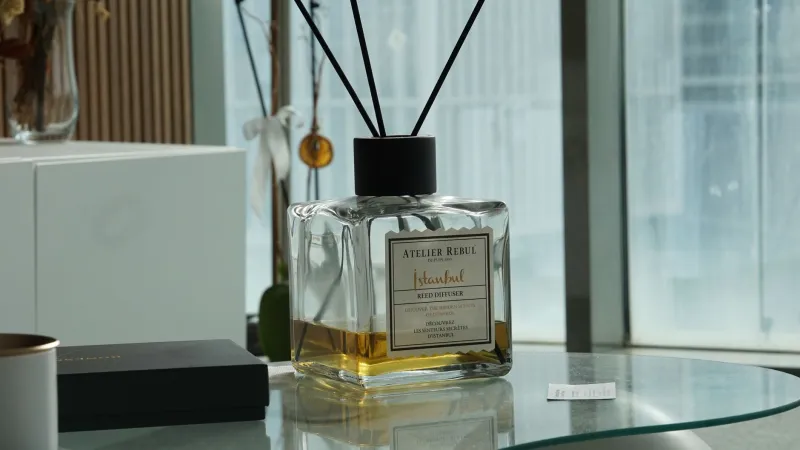
There is a moment, familiar to any seasoned traveler, when the scent of a particular lobby drifts back unexpectedly—on a city street, in an airport terminal, or simply in the quiet of an ordinary morning. Without warning, an entire stay reassembles itself: the quality of the light, the temperature of the air, the particular hush of a well-appointed corridor. This is not coincidence. Increasingly, it is design.
Across the upper echelons of global hospitality, a quiet revolution is underway. The most discerning properties in the world are no longer satisfied with competing on marble finishes and panoramic suites alone. They are investing, with considerable deliberateness, in the engineering of sensory identity—commissioning bespoke fragrances, composing original ambient music, and developing culinary philosophies so specific they function as a form of intellectual property. The goal is singular: to become unforgettable in ways that transcend the visual.
The Science of Staying With You
The neurological case for multisensory branding is compelling. Dr. Rachel Herz, a cognitive neuroscientist at Brown University whose research focuses on olfaction and emotional memory, has long maintained that smell is the only sense with a direct neural pathway to the brain's limbic system—the region governing emotion and long-term memory. "When you encounter a scent that has been paired with a powerful experience," she has noted, "the emotional recall is almost instantaneous and remarkably vivid. Other senses simply do not work that quickly."
For luxury hospitality strategists, this is not merely interesting science. It is a competitive blueprint. A guest who can be made to feel, on a neurological level, that a particular resort smells like nowhere else on earth has been given something that no loyalty points program can replicate: an emotional anchor.
Sound functions through a different but equally powerful mechanism. Research published by the Journal of Retailing and Consumer Services has demonstrated that ambient acoustics measurably influence perceived quality, dwell time, and willingness to spend. In hospitality contexts, the implications are significant. A soundscape that is too generic—too obviously drawn from a streaming playlist—signals, however subtly, a lack of intention. Conversely, an original composition, one designed specifically for a property's architecture and ethos, communicates craft.
The Olfactory Architects
The creation of a signature resort scent is, at its most refined, an exercise in narrative translation. Perfumers working within the luxury hospitality space describe a process that begins not with fragrance notes but with story. What is the essential character of this place? What does the landscape carry on the wind? What emotional register should a guest inhabit the moment they cross the threshold?
Several of the world's most celebrated independent fragrance houses—among them Givaudan and Robertet, both of which maintain discreet hospitality divisions—now work directly with resort creative directors to develop olfactory identities that are legally protected. These are not merely pleasant lobby diffusions. They are registered compositions, applied with precision across multiple touchpoints: arrival halls, spa corridors, guest room linens, and even the warm towels offered upon check-in.
One prominent resort group operating across the Caribbean and Southeast Asia has gone further still, extending its signature scent into a proprietary line of amenities available exclusively to guests—candles, room sprays, and bath oils that allow the experience to be transported home. The commercial logic is elegant: the scent becomes a recurring revenue stream while simultaneously functioning as an ongoing brand touchpoint in the guest's daily life.
Composing the Atmosphere
The acoustic dimension of luxury hospitality has attracted an equally specialized class of practitioner. Acoustic designers—distinct from interior acousticians focused purely on sound management—approach a property's auditory environment as a compositional problem. What frequencies should predominate in the spa? What tempo is appropriate for the late-afternoon terrace? How should the energy of a lobby shift between morning arrivals and evening cocktail hour?
Several ultra-luxury properties have commissioned entirely original scores for their public spaces, working with composers whose credits span film, contemporary classical music, and immersive installation art. The result is a sonic environment that cannot be identified, Shazam'd, or encountered anywhere else—a form of auditory exclusivity that reinforces the property's broader positioning.
At one acclaimed resort in the Maldives, the soundscape transitions through seven distinct compositions across the course of a single day, each calibrated to the angle of the sun and the rhythm of guest activity. Guests rarely articulate what they are hearing. They simply feel, as one regular visitor described it, that "the place always seems to be in the right mood."
The Proprietary Palate
Culinary identity has long been a pillar of luxury hospitality, but the most forward-thinking properties are now approaching flavor with the same intentionality applied to scent and sound. This goes well beyond the hiring of celebrated chefs. It involves the codification of a culinary philosophy so specific—so rooted in a particular landscape, agricultural heritage, and aesthetic sensibility—that it becomes, in effect, a signature.
Some resorts have begun trademarking specific preparations, flavor profiles, and even the proprietary blends of local ingredients that anchor their dining programs. Others have established on-property farms, salt harvesting operations, and herb gardens not merely as sustainability gestures but as sources of ingredients that cannot be sourced, replicated, or tasted anywhere else in the world.
The effect on guest loyalty is measurable. Research conducted by Cornell University's School of Hotel Administration has consistently found that food and beverage experiences rank among the most powerful drivers of return intent among affluent travelers—surpassing, in many cases, the physical accommodation itself. When a culinary experience is genuinely irreplaceable, the resort that delivers it acquires a form of leverage that no competitor can easily undercut.
Memory as the Ultimate Amenity
What unites these disciplines—fragrance, acoustics, and culinary identity—is a shared understanding of what luxury, at its most elevated, actually delivers. It is not comfort alone, nor exclusivity, nor even beauty. It is the creation of experiences so precisely constructed that they persist in the mind long after the physical stay has concluded.
For American travelers accustomed to the visual language of luxury—the marble, the infinity pool, the impeccably pressed uniform—the shift toward sensory branding represents something genuinely new. It asks guests to notice what they feel rather than what they see, and to recognize that the most sophisticated properties are operating on registers that photographs cannot capture and reviews cannot fully convey.
The resorts that have mastered this discipline are, in a meaningful sense, no longer simply selling nights. They are selling memories—and they are engineering those memories with a precision that would have seemed extraordinary even a decade ago. In an era when images of even the most remote luxury property are available to anyone with a smartphone, the only truly defensible competitive position may be the one that lives, quietly and permanently, in the guest's own nervous system.