Planning the Day in Reverse: A Case for Building Travel Around the Light
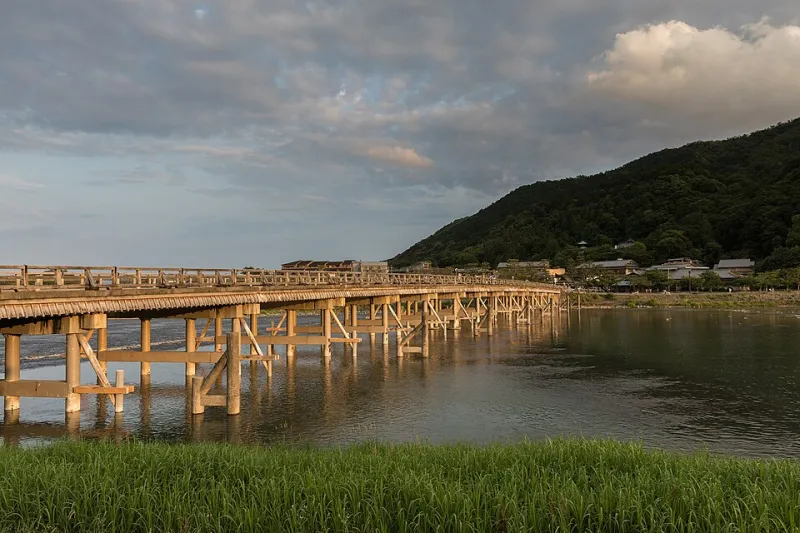
Photo: Basile Morin, CC BY-SA 4.0, via Wikimedia Commons
Somewhere along the way, the sunset became a commodity. Resorts now sell it by the table, with two-hour seatings and minimum spends. Cruise ships stage deck parties around it. A whole genre of social media has trained millions of travelers to stand in designated viewpoints at designated times, phones raised toward a sky that has been promised to them like a theater seat.
The contrarian view — held quietly by a small population of experienced travelers — is that the industry has it exactly backward. The sunset is not an event one attends. It is a condition one engineers. And the travelers who understand this are planning entire journeys in reverse, beginning not with the destination or the hotel but with a specific time on a specific evening: the moment the light turns.
The Physics of the Golden Hour
There is real science beneath the romance. Photographers have known for a century that the hour around sunrise and sunset produces light of a fundamentally different character — longer wavelengths, softer angles, shadows that sculpt rather than flatten. But the quality of that light is not distributed evenly across the planet, and this is where most itineraries go wrong.
Latitude is the master variable. Near the equator, the sun drops almost vertically, and the transition from day to night is swift and brief — a gorgeous but fleeting fifteen minutes. At middle latitudes, and especially in the forties and fifties, the sun's path is oblique, stretching the golden hour into a prolonged, luminous event. This is one reason the light of the Mediterranean in June, or of coastal Maine in September, has attracted painters for two centuries: geography is doing most of the work.
Season matters as much as place. The weeks surrounding the equinoxes offer the most reliable golden hours at nearly every latitude, while high summer at northern latitudes can produce evenings of extraordinary length. Humidity and air quality are the hidden factors — a certain amount of atmospheric moisture scatters light into those famous saturated tones, which is why tropical sunsets over water so often outperform their postcard reputation, and why desert light, though crystalline, can turn harsh at the margins of the day.
Where the Light Is Objectively Extraordinary
Certain places have earned their reputations on physics rather than marketing. The Aegean islands, where whitewashed walls act as reflectors and the sun sets over open water, produce a doubled light — direct glow and bounced glow — that no interior designer could replicate. The Amalfi Coast in late September, when the crowds thin and the sun sinks behind Capri, offers a warm, low-angle illumination that flatters every cliffside terrace.
In the United States, the California coast north of Big Sur delivers a golden hour prolonged by marine layer, the sun diffusing rather than disappearing. And the Florida Keys, strung along a subtropical latitude with water to the west, offer one of the few genuinely reliable over-water sunsets in the continental states — a fact Key West has wisely never needed to exaggerate.
The point is not to hand anyone an itinerary. It is that these places can be identified in advance, by latitude and season and orientation, rather than discovered by chance and photographed by reflex.
The Reverse Itinerary
Here is the practice, and it requires a small act of rebellion against how trips are usually planned. Choose your dates. Determine, for your latitude, when the golden hour will fall — 6:47 p.m., say, in early October in the mid-Atlantic, or 8:20 p.m. on a June evening in the Aegean. Then build the day backward from that moment.
Where will you be standing at 6:47? A west-facing terrace, ideally elevated, with unobstructed horizon. Book that table — or better, that villa — first. Then schedule dinner after, not during, the light, because the finest golden hours deserve undivided attention rather than a waiter's interruption. Let the morning activities follow in service of the evening: excursions that return with margin, spa appointments timed to end before the descent begins, no transfers scheduled into the last hour of daylight.
It sounds fussy. Practitioners describe it as liberating. The day acquires a natural climax and a natural rhythm, and the traveler is freed from the low-grade anxiety of wondering whether tonight, of all nights, will be the one with a good seat.
Reclaiming the Hour
The sunset view cannot be reserved, which is precisely why the industry has learned to sell the reservation instead. But the sophisticated traveler's answer is not to pay more for a better slot at the sunset bar. It is to know the physics, pick the latitude, face the right direction — and arrive owning the hour outright.