The Kitchen Takes the Reservation: Why the Chef Now Outranks the Address
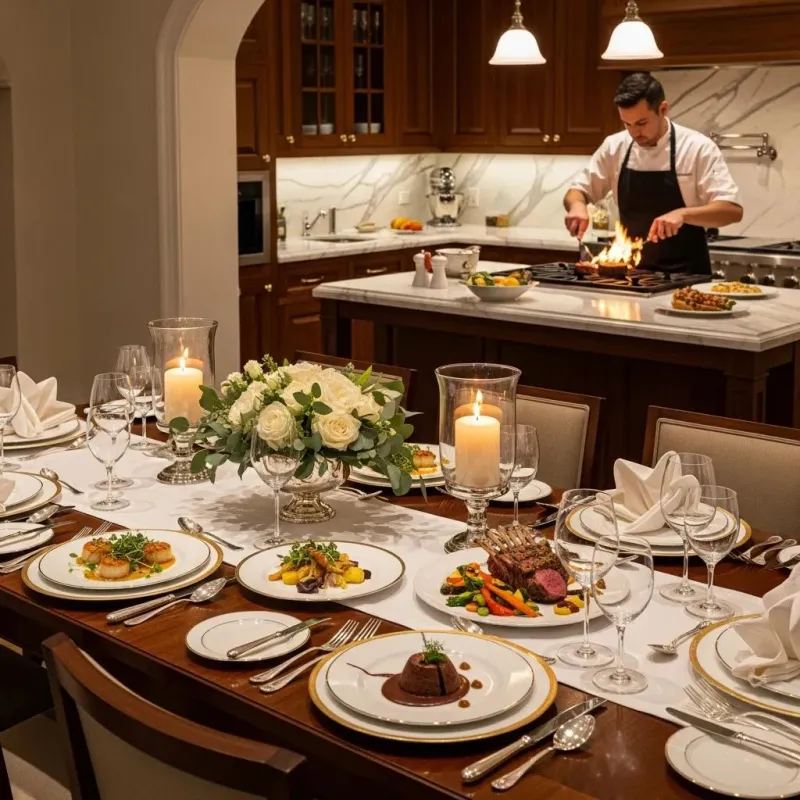
Photo: private chef plating elegant dinner in luxury villa kitchen, via kaviarrestaurants.com
There was a time when the deciding factor between two oceanfront properties came down to square footage, sunset orientation, or the depth of the infinity pool. Today, the question a growing number of American travelers ask first is simpler and more revealing: who is cooking?
The private chef, once a discretionary add-on arranged a week before departure, has become the centerpiece of the luxury villa experience. In the most competitive segments of the market — Amalfi Coast estates, Balinese cliffside compounds, Utah mountain retreats — properties are increasingly built, staffed, and marketed around the kitchen. Some travelers now book the chef before they book the villa.
From Service to Signature
What changed? Part of the answer is culinary literacy. A generation of American travelers raised on tasting menus in New York, Chicago, and San Francisco arrives with palates calibrated to the finest dining rooms in the country — and discovers that a talented private chef, cooking in a villa kitchen with access to that morning's market, can outperform the Michelin-starred restaurant down the road.
The reasons are structural as much as technical. A restaurant chef cooks for strangers, at volume, within the constraints of a fixed menu. A private chef cooks for six people, once, with complete freedom. There is no inventory pressure, no covers to turn, no compromise. The swordfish came off a local boat at dawn; the tomatoes were grown four kilometers away; the menu was drafted that afternoon around a conversation the chef had with the guests at breakfast.
"In a restaurant, I cooked what the menu allowed," says one chef who spent a decade in a Michelin-starred kitchen before moving into private work full-time. "In a villa, I cook what the island gave me this week. It's the purest version of the job I trained for."
The Economics of the Remote Kitchen
Staffing a world-class kitchen in a remote location is neither simple nor inexpensive, and the logistics reveal why this remains a genuinely premium amenity. Independent private chefs typically command daily rates from $800 to $2,500 for themselves, with food and beverage billed separately — and the finest practitioners, particularly those with loyal repeat clients, book their calendars a year in advance.
Villa owners and management companies have responded by building chef programs into their operations. The most sophisticated properties maintain rosters of resident or rotating culinary talent, invest in professional-grade equipment in even the most remote kitchens, and cultivate relationships with local producers the way a restaurant cultivates its suppliers. Some now treat their chef the way a five-star hotel treats its concierge: as the person around whom the entire guest relationship is organized.
For travelers, the math can be surprising. A family of six dining out at high-end restaurants for a week will spend a sum comparable to a private chef's fee — while gaining privacy, flexibility, and meals paced to their evening rather than a reservation book.
The Menu You Cannot Order Anywhere Else
The experiences that define this trend tend to share a quality of place that no restaurant can replicate. A tasting menu served at 9,000 feet in a Colorado chalet, each course built around foraged alpine ingredients. A seaside grill in the Cyclades where the entire meal is cooked over olive wood within sight of the water it came from. A single long table in a Tuscan courtyard, the pasta course timed not to a kitchen ticket but to the sunset.
These meals have become, for many travelers, the memory the trip is built around — the evening retold at dinner parties long after the villa's floor plan has faded from recollection. It is a familiar pattern in luxury: the amenity that cannot be commodified is the one that becomes most coveted.
How to Book the Chef, Not Just the Villa
For American travelers considering this route, the practical advice is consistent among those who work in the field:
- Book early, and book the person, not the position. The best private chefs are individuals with names, styles, and calendars. Ask for menus they have actually executed, not a brochure.
- Share more than dietary restrictions. The finest private meals begin with a conversation — the dishes that recall a honeymoon, a grandmother's table, a first trip abroad.
- Let the destination lead. A great private chef will build the menu around what the market, the coast, or the mountain is offering that week. Resist the urge to import a fantasy menu from home.
- Consider the full arc of the stay. Many travelers now structure a week around the kitchen: a market morning with the chef, a cooking session for the family, a final long lunch that serves as the trip's true farewell dinner.
The address still matters, of course. The view still matters. But the most considered trips of the season are increasingly planned around a different anchor entirely — a kitchen, a table, and the person standing between them.