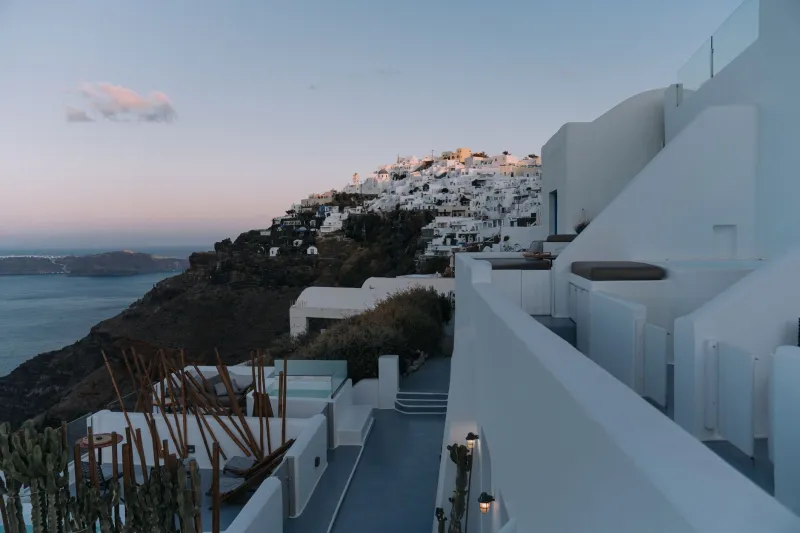
Beyond the Penthouse Suite: Why the World's Wealthiest Travelers Are Trading Five-Star Hotels for Private Island Sovereignty
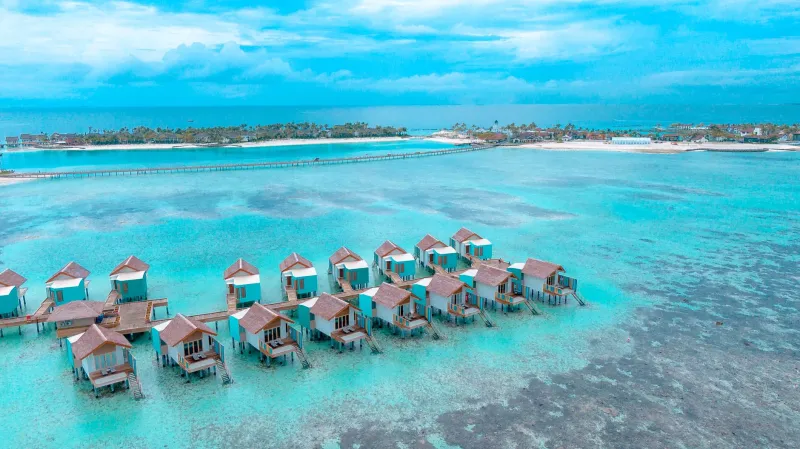
There was a time when booking the presidential suite at a legendary Parisian palace hotel or commanding a cliffside villa at an Amalfi resort represented the absolute apex of travel aspiration. For decades, the world's finest hotel brands competed fiercely for the patronage of billionaires, celebrities, and heads of state — and for a while, the formula worked beautifully.
That era, however, is quietly drawing to a close.
Across the travel industry, a pronounced and accelerating trend has emerged among ultra-high-net-worth individuals (UHNWIs): the wholesale abandonment of conventional luxury hospitality in favor of private island retreats that offer something no five-star property, however magnificent, can truly deliver. Not a better room. Not a more attentive butler. Something categorically different — sovereign exclusivity.
The Limits of Shared Luxury
To understand why private islands have captured the imagination of America's wealthiest travelers, one must first appreciate the paradox at the heart of traditional luxury hospitality. The finest hotels in the world — the Aman, the Four Seasons, the Rosewood — are, by definition, shared spaces. Even in the most secluded villa compound, guests remain aware of other guests. Corridors are crossed. Restaurant reservations are competed for. The pool, however pristine, is never entirely one's own.
For travelers whose daily lives are defined by an almost architectural control over their environment, this shared dimension introduces a subtle but persistent friction. Luxury travel concierge professionals who serve clients with nine-figure net worths speak frequently of this phenomenon.
"The turning point for many of my clients is not dissatisfaction with a particular hotel," notes one New York-based luxury travel advisor who works exclusively with family offices and private equity principals. "It is the realization that true privacy — the kind where you are not merely undisturbed but genuinely unobserved — simply cannot exist within a traditional hotel framework, no matter how many stars it carries."
The Private Island as a Statement of Intent
A private island retreat is, in the most fundamental sense, a statement. It declares that the traveler's requirements have graduated beyond what the hospitality industry's standard offerings can accommodate. When a family from Greenwich, Connecticut, or a technology founder from San Francisco books an entire island for two weeks, they are not purchasing a room — they are purchasing a reality.
The distinction is profound. On a private island, the staffing ratio inverts entirely. Rather than one staff member serving multiple guests, entire teams — often numbering thirty to fifty professionals — exist solely to attend to one party. Executive chefs design menus around individual dietary philosophies. Marine biologists curate snorkeling itineraries based on specific interests. Sleep consultants adjust room temperatures, linen weights, and ambient soundscapes to each guest's documented preferences.
Properties such as Necker Island in the British Virgin Islands, Laucala Island in Fiji, and North Island in the Seychelles have long set the standard for this model. Yet the market has evolved considerably. A new generation of bespoke island properties — many developed specifically for the American UHNWI market — now offers levels of customization that would have seemed fantastical even a decade ago.
Personalization at a Molecular Level
What separates the premier private island experience from even the most lavish resort stay is the concept of anticipatory personalization — the art of fulfilling desires before they are articulated.
Before arrival, guests at the most sophisticated island properties complete detailed preference profiles that extend far beyond the usual dietary restrictions and pillow firmness selections. These documents capture everything from preferred ambient lighting temperatures to the specific vintage of Champagne a guest opened on their wedding anniversary. Children's interests are catalogued so that age-appropriate adventure programs can be constructed. Art collections are researched so that island libraries and galleries can be curated accordingly.
During the stay itself, this intelligence is deployed invisibly. A guest who mentioned an interest in marine conservation during the pre-arrival consultation might find a private presentation from a visiting oceanographer arranged quietly for their third morning. A couple celebrating a milestone anniversary might discover that the island's chef has recreated, from scratch, a dish from the restaurant where they became engaged — sourced through discreet research conducted weeks in advance.
This is the dimension that no urban hotel, however resourced, can replicate. The private island operates as a closed ecosystem, and within that ecosystem, the guest is not one priority among many — they are the only priority.
The Psychology of Genuine Escape
Beyond logistics and amenities, there is a psychological dimension to the private island experience that resonates deeply with America's most accomplished travelers. The individuals who have built companies, navigated complex negotiations, and managed vast responsibilities carry a cognitive load that conventional vacations rarely succeed in dissolving.
The knowledge that one's island is genuinely inaccessible — that no unexpected encounter, no overheard conversation, no ambient reminder of the outside world will intrude — creates a quality of mental decompression that is qualitatively different from anything achievable in a shared environment. Psychologists who work with high-performance executives describe this as the difference between rest and genuine restoration.
"There is a neurological difference between being in a beautiful place and being in a place that is entirely, unconditionally yours," explains one behavioral researcher who has studied the vacation patterns of ultra-wealthy Americans. "The latter activates a depth of relaxation that the former simply cannot reach."
What 2024's Discerning Traveler Demands
The private island market has responded to evolving American tastes with considerable sophistication. Wellness infrastructure has become non-negotiable at the highest tier — not the spa menu variety, but deeply personalized programs developed in partnership with the guest's own physicians and wellness teams. Some islands now welcome guests' personal trainers, nutritionists, and therapists as part of the party.
Sustainability, too, has become a defining criterion rather than a marketing footnote. American UHNWI travelers — particularly those under sixty — increasingly scrutinize the environmental credentials of their chosen properties with the same rigor they apply to their investment portfolios. Islands powered entirely by renewable energy, operating regenerative marine programs, and maintaining genuine relationships with local communities command a premium that the market pays willingly.
Connectivity, paradoxically, remains essential. The fantasy of complete disconnection is rarely the reality. The most sophisticated island properties offer military-grade secure communications infrastructure, allowing guests to maintain absolute privacy while remaining functionally available to their offices, families, and advisors.
The Future of Sovereign Luxury
As the private island sector matures, the competition for the most discerning American travelers has intensified remarkably. Properties are no longer content to offer beautiful settings and attentive service — they are constructing entire experiential universes, commissioning resident artists, establishing culinary gardens, and forming partnerships with cultural institutions to ensure that each stay delivers intellectual and emotional enrichment alongside physical indulgence.
The finest five-star hotels will always occupy a cherished place in the landscape of luxury travel. For city arrivals, cultural immersions, and the particular pleasures of magnificent public spaces, they remain unrivaled. But for the traveler who has arrived at the point where the very concept of sharing — a restaurant, a beach, a sunset — feels like a compromise, the private island represents not an upgrade but an entirely different category of experience.
At Bellapais Deluxe, we have always believed that genuine luxury is defined not by the quality of what is provided, but by the completeness of what is felt. On a private island, that completeness is finally, absolutely, within reach.