The Art of the Off-Hour: How the World's Most Private Travelers Are Mastering Global Time to Claim Destinations Entirely Their Own
Somewhere between the second Negroni and the third familiar face encountered at the bar of a celebrated Capri hotel, a certain kind of traveler arrives at a conclusion. The destination is flawless. The property is impeccable. And the experience of genuine solitude — of feeling that one has, however briefly, claimed a corner of the world as one's own — is entirely absent.
This is the paradox of the ultra-luxury circuit: the most beautiful places on earth, at the most celebrated moments of the year, are precisely where one is most likely to encounter everyone one was, in some sense, traveling to escape.
The response, among the most strategically minded of America's affluent travelers, has been characteristically analytical. If geography cannot guarantee privacy, perhaps time can.
The Social Calendar as a Map
The global social calendar of the ultra-wealthy is, upon examination, a remarkably predictable document. The Hamptons empties in a specific week. The European summer circuit — Sardinia, Mykonos, the French Riviera — follows a rhythm that has remained largely consistent for decades. Aspen concentrates its most socially saturated weeks around predictable holidays. Art Basel draws its particular cohort to Basel, then Miami, on a schedule that anyone can consult.
For the traveler who finds this predictability useful, it functions less as a social calendar and more as a map of where not to be, and when. The inverse of the circuit — the destinations that are magnificent precisely because the circuit has moved on, or has not yet arrived — becomes navigable through the same intelligence.
This is the calculation that a growing number of discerning travelers are making with increasing sophistication. It is not, it should be noted, a calculation born of misanthropy. Many of these travelers are deeply social within their own chosen contexts. What they are avoiding is not people per se, but the particular texture of a destination oversaturated with the energy of the social performance — the ambient pressure of being seen, recognized, and engaged at every turn.
The Time Zone as a Privacy Instrument
The strategic use of time zones adds a further dimension to this calculus. International travel across multiple time zones creates natural windows of solitude that have nothing to do with a destination's popularity and everything to do with the biological and logistical rhythms of those who visit it.
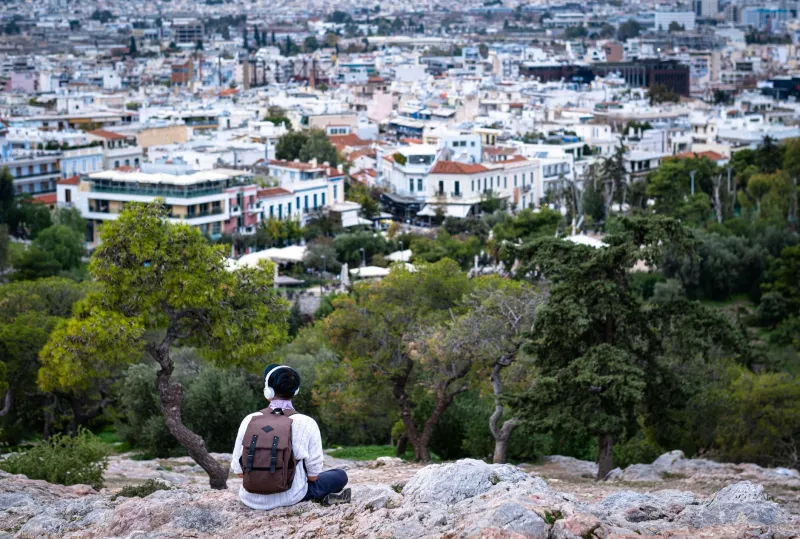
The serious traveler who arrives in Kyoto from the American East Coast will find themselves alert and mobile at four in the morning local time — precisely the hour at which the city's ancient temple gardens receive no visitors and the streets of Gion hold only delivery workers and the occasional monk. This is not an accident to be corrected with sleep aids. It is, for the strategically inclined, an asset to be scheduled around.
Similarly, the traveler who structures a stay in Marrakech to begin mid-week during the shoulder season will discover a medina that operates at an entirely different register than the one encountered during the weekend high season, when private jets from London and New York converge on the city's most celebrated riads. The souks are navigable. The palaces are quiet. The rooftop terraces at dusk belong, effectively, to whoever thought to be there.
Reading the Room Before the Room Fills
Beyond the mechanics of time zones, the most privacy-conscious travelers have developed a sophisticated literacy around the micro-calendars of specific destinations — the local festivals, the school holiday schedules of the key feeder markets, the conference cycles that fill certain cities with a particular demographic at predictable intervals.
A luxury property in Singapore during a major international financial forum will host a different guest profile than the same property three weeks later. A celebrated resort in the Maldives will feel entirely different during the European February half-term than it will during the quieter weeks that bracket it on either side. These distinctions are invisible to the traveler who books according to personal availability alone. They are essential intelligence for the traveler whose primary objective is a particular quality of experience.
Some specialist travel advisors now offer what might be described as temporal consulting alongside their more conventional services — an analysis not just of where a client should travel, but of precisely when their chosen destination will align with their desired social temperature. The most rigorous of these advisors maintain detailed notes on the rhythm of individual properties: which weeks the regular clientele tends to cluster, when the staff is freshest and most attentive, which months carry the ideal combination of favorable conditions and manageable guest density.
The Unexpected Gift of the Transitional Moment
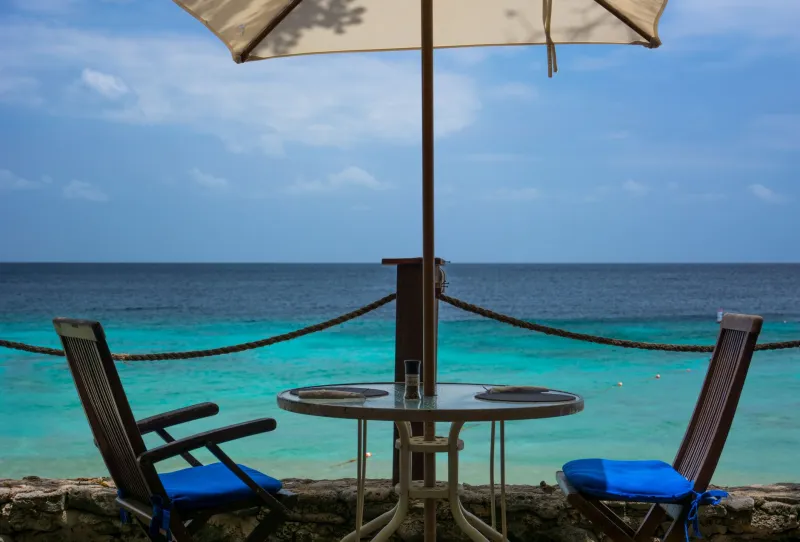
There is a particular quality of experience available at world-class destinations during what might be called the transitional moment — the days immediately following the departure of the high-season crowd, before the property has fully exhaled. The staff, still calibrated to the demands of peak occupancy, brings a heightened attentiveness to a smaller number of guests. The property feels simultaneously alive and spacious. The energy of the season lingers without its social weight.
Travelers who have learned to seek out these windows describe them with a consistency that borders on the devotional. The Amalfi Coast in early October. The great safari camps of East Africa in the first weeks of November. The Provençal wine country after the harvest crowds have dispersed. These are not compromised versions of the peak-season experience. For many who have sampled both, they are the superior one.
The Discipline of Knowing When to Arrive
Ultimately, the art of temporal luxury is an exercise in a kind of discipline that affluent Americans are not always encouraged to practice: the willingness to subordinate personal convenience to experiential quality. It requires flexibility in scheduling, a willingness to travel when others are not, and a certain resistance to the social gravity of the circuit — the pull toward being where one's peers are, at the moment they are there.
For those who have cultivated this discipline, the reward is not merely solitude. It is something richer: the experience of a destination encountered on its own terms, unmediated by the collective performance of the season. The piazza at dawn. The beach at the turning of the tide, before the umbrellas are arranged. The hotel dining room on a quiet Tuesday, when the chef cooks for pleasure rather than volume.
These are the moments that the global social calendar, in its relentless gregariousness, tends to obscure. The most private travelers have simply learned to arrive before it does.