Follow the Vine: How Wine Culture Has Become the Sophisticated Traveler's Most Reliable Compass
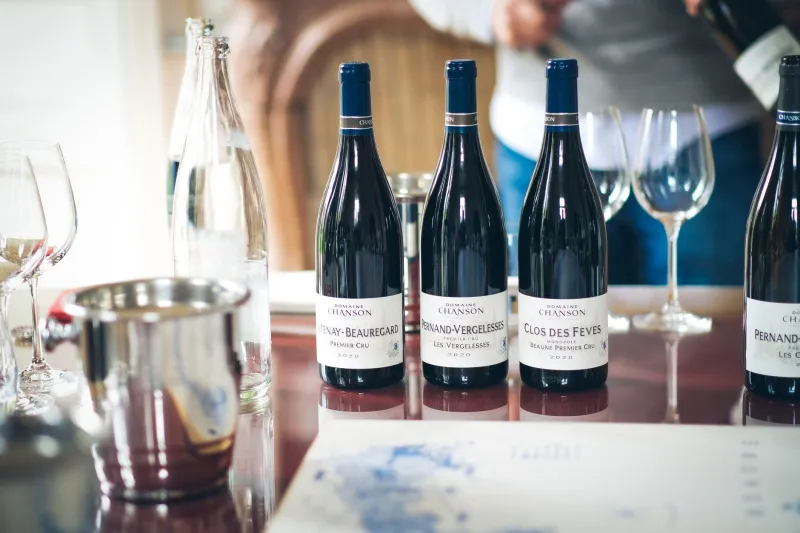
There is an old saying among serious wine collectors that a great bottle does not merely contain wine — it contains a place, a season, a set of human decisions made in the presence of soil and weather and time. It is a philosophy that the world's most discerning travelers are now applying not merely to their cellars, but to their itineraries. The result is a form of exploration that is simultaneously more intimate, more exclusive, and more revelatory than anything a conventional travel guide could produce.
Wine-centric travel is not, of course, a new concept. What is new — and what is quietly transforming how affluent Americans plan their most meaningful journeys — is the depth and intentionality with which this approach is being applied. These are not wine tours. They are full civilizational excavations, conducted through the medium of the glass.
The Vineyard as Cultural Decoder
Consider what a serious engagement with a wine region actually demands of the traveler. To understand a great Burgundy, one must understand the Cistercian monks who mapped the Côte d'Or with monastic precision, the geological accident of Jurassic limestone that gives Chambolle-Musigny its ethereal delicacy, and the multigenerational families — the Rousseaus, the Lefrives, the Comtes Lafons — who have devoted their lives to interpreting a few acres of earth. To visit Burgundy through wine is to visit its history, its theology, its agrarian sociology, and its culinary tradition simultaneously.
The same logic applies across every serious wine-producing region on the planet. In Piedmont, the nebbiolo grape and the culture of the Langhe hills are inseparable. In the Douro Valley of Portugal, the schist terraces carved into near-vertical slopes speak to centuries of human labor and ingenuity. In Mendoza, the relationship between the Andes' snowmelt and the high-altitude malbec vineyard is a story about water, ambition, and the Argentine character. Wine is, in every case, a concentrated expression of everything that makes a place itself.
The Doors That Open for the Knowledgeable Guest
What separates the wine-literate traveler from the casual visitor is not merely appreciation — it is access. Families who have been producing wine for four or five generations across Tuscany's Chianti Classico zone, Alsace's Grand Cru hillsides, or California's Sonoma Coast do not typically open their estate homes, their private cellars, or their lunch tables to strangers who arrive with a booking confirmation. They open them to people who demonstrate a genuine understanding of what has been built.
This is a form of social currency that transcends conventional wealth. A well-timed reference to a specific vintage, a thoughtful question about a winemaker's decision to abandon new oak, an understanding of why a particular parcel carries its own appellation — these are the passwords that unlock hospitality of a fundamentally different order than anything a five-star hotel can provide. The private lunch in the farmhouse kitchen, the vertical tasting of library wines poured by the producer's daughter, the invitation to return during harvest: these are experiences that exist entirely outside the commercial hospitality ecosystem and are available only to those who have earned entry through knowledge and genuine respect.
Regions Worth Mapping Your Journey Around
For American travelers looking to restructure their European itineraries around wine culture, several regions reward the approach with particular generosity.
The Priorat, Catalonia. This remote, almost lunar landscape of llicorella slate in the mountains west of Tarragona remains largely unknown to American tourists despite producing some of the most intensely expressive wines in Spain. The village of Gratallops and the surrounding hamlets offer a handful of exceptional small-production estates — Álvaro Palacios, Clos Mogador, Mas Doix — whose proprietors, approached with appropriate knowledge and courtesy, have been known to receive serious visitors with remarkable warmth. The accommodation options are limited and deliberately so, making the region's few exceptional rural properties feel genuinely discovered.
The Jura, Eastern France. Situated between Burgundy and Switzerland, the Jura produces wines of extraordinary idiosyncrasy — oxidative whites, light-footed reds from the poulsard grape, the singular vin jaune aged under a film of yeast for a minimum of six years. The region's obscurity is, for the discerning traveler, its primary virtue. The town of Arbois, where Louis Pasteur spent his childhood, offers a handful of small hotels and restaurants of genuine quality, and the estates of Henri Maire, Domaine Ganevat, and Stéphane Tissot are among the most intellectually stimulating visits available to the wine-curious traveler in France.
The Willamette Valley, Oregon. For American travelers who prefer not to cross the Atlantic, Oregon's primary wine region offers a compelling domestic alternative. The valley's pinot noir culture, modeled consciously on Burgundian principles, has produced a community of producers — Eyrie Vineyards, Adelsheim, Domaine Drouhin Oregon — who bring a philosophical seriousness to their work that resonates with the most discerning palates. The proximity of Portland's exceptional restaurant culture makes the Willamette Valley a complete luxury experience that requires no passport.
What the Sommelier Already Knows
The finest sommeliers at the world's great restaurants have long understood that wine is not an accompaniment to travel — it is a methodology for travel. The regions they recommend to their most valued guests are rarely the ones featured in mainstream travel publications. They are the places where wine and landscape and human culture have achieved a rare coherence, where the glass in one's hand is a direct extension of the ground beneath one's feet.
For the traveler who adopts this perspective, the map of the world reorganizes itself entirely. The well-trodden itineraries recede. In their place emerges a more personal, more layered, and more genuinely luxurious geography — one that rewards curiosity, respects tradition, and delivers the rarest of all travel experiences: the sensation of having genuinely arrived somewhere real.