The Deliberate Plunge Into the Crowd: Why America's Most Affluent Travelers Are Choosing the Peak Season Rush
The conventional wisdom of luxury travel has always been directional: move away from the crowd. Book the shoulder season. Secure the private villa beyond the resort's main compound. Arrange the museum access before the doors open to the public. Protect yourself, at every turn, from the presence of other people.
It is a philosophy that has generated extraordinary experiences and an entire industry built around its execution. It has also, according to a growing number of the world's most seasoned travelers, produced something increasingly difficult to ignore: a certain sterile perfection that, for all its technical excellence, has begun to feel strangely inert.
This is the quiet heresy now circulating among America's most experienced luxury travelers—the admission, sometimes reluctant and always carefully qualified, that the empty resort is not always the best resort. That the private beach can, under certain conditions, feel less like a privilege and more like a sentence. That the world's great destinations are, at their finest, human places—and that the deliberate removal of humanity from them may be costing something more valuable than it saves.
The Case Against the Velvet Rope
Let us be precise about what is being argued here, because it is not an argument against luxury. The travelers who are choosing the peak season rush are not abandoning their standards—they are, in many cases, raising them in a direction the industry has been slow to recognize.
What they are rejecting is the conflation of exclusivity with quality. The assumption that fewer people automatically means a better experience is, upon examination, a relatively recent construct—one that serves the marketing interests of ultra-exclusive properties rather more reliably than it serves the genuine interests of the traveler. The great piazzas of Rome, the souks of Marrakech, the night markets of Bangkok—these places were never designed for solitude. Their entire vitality depends on density, on the accumulated energy of thousands of simultaneous human intentions. To experience them emptied is to experience a different place entirely, and arguably an inferior one.
What the Crowd Actually Offers
The travelers who have made this shift describe a quality of experience that is difficult to articulate but immediately recognizable once encountered: the sensation of a place functioning at full capacity, of being inside something genuinely alive rather than curated for your comfort.
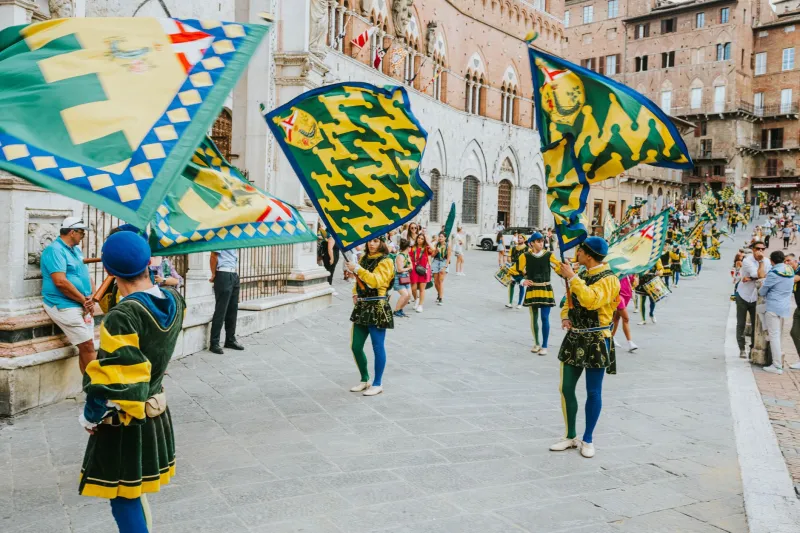
In practical terms, this manifests in ways both large and small. The restaurant that is impossible to book in August, navigated through a combination of persistence, charm, and genuine engagement with the maître d'hôtel, yields a meal that carries an entirely different emotional weight than the private dining experience arranged six months in advance by a travel designer. The discovery made by accident—the narrow street festival stumbled upon while navigating a crowd, the local musician heard through an open window, the conversation struck up at a shared table when no private one was available—belongs to the traveler in a way that no pre-arranged encounter can replicate.
There is, these travelers note, a particular quality of spontaneity that only becomes available when the itinerary is genuinely, not merely theatrically, open. The controlled disorder of a city at peak season creates conditions in which the unexpected is not only possible but inevitable. For travelers who have experienced every variety of curated perfection, that inevitability is something close to relief.
The Luxury of Engagement
There is a deeper philosophical current running beneath this preference, one that touches on what luxury travel is ultimately for. The most thoughtful proponents of peak-season travel argue that the industry's obsession with exclusivity has gradually shifted the traveler's relationship to a destination from participant to observer. When the beach is empty, the village quiet, and the restaurant reserved entirely for your party, you are not inside the culture of the place—you are consuming a representation of it, carefully staged for your benefit.
The crowd, for all its inconveniences, forces genuine engagement. It demands patience, adaptability, a willingness to be surprised and occasionally frustrated. These are not comfortable qualities, but they are, many argue, precisely the conditions under which the most meaningful travel experiences occur. The traveler who has navigated the chaos of Venice in August—who has eaten at a counter alongside strangers, waited in a queue for a water taxi, and found themselves inside a church they had no intention of visiting simply because the crowd carried them through the door—has encountered the city in a register that the traveler in a private gondola, gliding through empty early-morning canals, may have missed entirely.
The Limits of the Argument
This is not to suggest that the peak-season philosophy is without its complications, and intellectual honesty requires acknowledging them. There are destinations where the density of high season has crossed from authentic vitality into genuine environmental and cultural damage—where the crowd is not the living community of the place but an external force overwhelming it. The discerning traveler who chooses to participate in this kind of overcrowding is not engaging with a culture; they are contributing to its erosion. The distinction matters, and the travelers making this choice at the highest level of sophistication are generally attentive to it.
There are also, frankly, moments when solitude is simply what the experience requires. The private island at dawn. The empty gallery before the crowds arrive. The quiet dinner for two on a terrace overlooking the sea. These experiences retain their value precisely and absolutely, and no contrarian argument diminishes them.
A More Complete Luxury
What the peak-season travelers are ultimately proposing is not the abandonment of luxury but its expansion. They are suggesting that the industry's current definition—quiet, exclusive, curated, controlled—captures only part of what travel at its finest can provide. The other part is messier, louder, and considerably less predictable. It smells like street food and sunscreen. It involves waiting. It occasionally involves being genuinely lost.
And for a growing number of Americans who have spent years in the rarefied atmosphere of empty resorts and private access arrangements, that other part has begun to feel, unexpectedly and unmistakably, like the more luxurious choice.