Rootless by Design: How America's Wealthiest Are Trading Deeds for a Life of Perpetual, Purposeful Motion
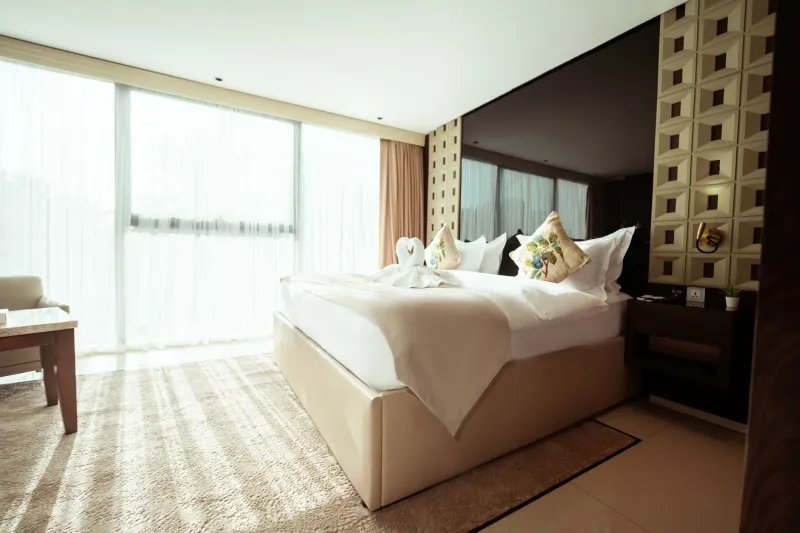
For generations, the second home — the Nantucket cottage, the Aspen ski chalet, the Palm Beach villa — served as the primary trophy of American affluence. It was a physical declaration of arrival, a deed pressed into the family ledger like a pressed flower between the pages of legacy. Yet something quietly seismic is occurring among the nation's most discerning wealth holders. They are selling. They are not replacing. And they are not looking back.
In its place, a deliberately nomadic model of living is emerging — one built not on square footage or property tax assessments, but on an almost philosophical commitment to impermanence as a form of freedom.
The Weight of Ownership
Speak candidly with any number of high-net-worth individuals who have recently divested vacation properties, and a recurring theme surfaces almost immediately: ownership, they confess, eventually became a burden dressed in beautiful clothes. A Malibu clifftop residence requires a property manager, a maintenance crew, a security system, a landscaper, and the perpetual anxiety of a structure sitting empty for forty-two weeks of the year. The home that was meant to provide sanctuary had quietly become another obligation on an already formidable list.
"There is a specific kind of exhaustion that comes from owning something beautiful that you rarely use," observed one New York-based private equity executive who, in 2022, liquidated three vacation properties across two continents. "The moment I checked into a suite at a property I loved and realized someone else was responsible for every detail of my comfort, I understood what I had been missing."
This sentiment — that the finest hospitality institutions already do what a private home attempts, and do it more elegantly — is becoming a foundational logic among a new generation of perpetual guests.
Stability Redefined
The concept that challenges most conventional thinking is this: that one can achieve a profound sense of rootedness without a fixed address. The perpetual guest model is not, its practitioners insist, a life of restless wandering. It is, rather, a life of deeply intentional curation — a portfolio of beloved institutions, seasonal rhythms, and returning relationships with properties that know one's preferences with the intimacy of a long friendship.
Several of the world's most celebrated hospitality groups have quietly begun accommodating this emerging clientele with bespoke long-stay arrangements that fall well outside the parameters of standard reservations. These are not extended hotel stays in the conventional sense. They are negotiated residencies — complete with personalized storage arrangements, dedicated staff liaisons, preferred suite assignments, and even the capacity to receive mail, conduct business meetings, and entertain privately within the property's infrastructure.
For the perpetual guest, a suite at a beloved resort in Montecito during spring, a private villa arrangement in coastal Maine through August, and a carefully selected property in Charleston for the autumn social season constitutes not a vacation schedule but a life architecture — one that happens to be maintained entirely by professionals.
What the Hospitality Industry Is Learning
The implications for luxury hospitality are considerable. Properties that have historically oriented their models around transient occupancy are beginning to develop dedicated long-term residency programs with their own pricing structures, service protocols, and amenity frameworks. The distinction between a luxury hotel and a private residence club is blurring with deliberate intent.
Some of the most forward-thinking resort communities in the United States — particularly those in Scottsdale, the Florida Gulf Coast, and select mountain destinations in Colorado — are now designing physical spaces with the permanent guest explicitly in mind. Larger walk-in closets, dedicated personal storage vaults, private residential entrances, and on-site concierge teams trained in the nuances of long-term relationship management are becoming standard considerations in new-build luxury hospitality projects.
The financial calculus, too, is shifting. When one factors in property taxes, maintenance costs, insurance premiums, staffing, and the opportunity cost of capital tied up in illiquid real estate, the economics of the perpetual guest model become surprisingly persuasive. For an individual accustomed to spending sixty or eighty nights per year at a single vacation property, a negotiated long-stay arrangement at a comparable or superior institution can represent meaningful financial efficiency — while delivering a dramatically elevated quality of experience.
The Psychology of Letting Go
Perhaps the most revealing dimension of this shift is what it says about how wealthy Americans are reconceiving the relationship between identity and possession. For much of the twentieth century, what one owned defined, in no small part, who one was. The address on the deed was an address on the self.
The perpetual guest model suggests a different identity architecture entirely — one in which what one has access to, and the refinement with which one navigates that access, becomes the more meaningful signal of sophistication. It is a shift from the noun of ownership to the verb of experience, and it carries with it a particular kind of confidence: the assurance that one need not claim a place to belong to it.
This is, at its core, a deeply modern luxury proposition. And for those who have embraced it, the world's finest properties are no longer destinations to visit. They are, in the most meaningful sense, home.
The Future Belongs to the Unanchored
As the hospitality industry continues to evolve in response to this emerging clientele, the properties best positioned to thrive will be those that understand the perpetual guest not as a long-stay booking but as a long-term relationship. The finest institutions have always known that true loyalty is built not through points programs or membership tiers, but through the quiet, consistent act of making a guest feel genuinely known.
For America's most discerning travelers, the future of luxury living may not be found on a property deed. It may be found in the moment a suite door opens and everything inside is exactly as it should be — because someone, somewhere, already knew.