Genuine by Design: How the World's Most Discerning Travelers Are Paying a Premium for the Unscripted
There is a particular irony at the heart of modern ultra-luxury travel, one that the industry's most thoughtful practitioners are only beginning to articulate with any real clarity. The wealthiest travelers in the world — people who could, by any reasonable measure, access anything they desire — have decided that what they desire most is something money has historically struggled to purchase: authenticity.
Not the facsimile of it. Not the Instagram-ready tableau staged in a renovated farmhouse with a carefully sourced linen tablecloth. The genuine article. And yet, the pursuit of that genuine article is being conducted from within properties that charge five figures per evening, staffed by teams whose sole purpose is to ensure no moment ever feels accidental. The tension is real. The demand is even more so.
The Status Symbol Nobody Expected
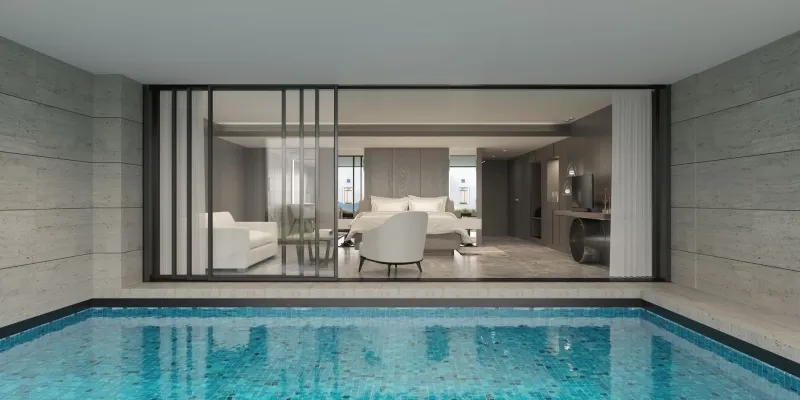
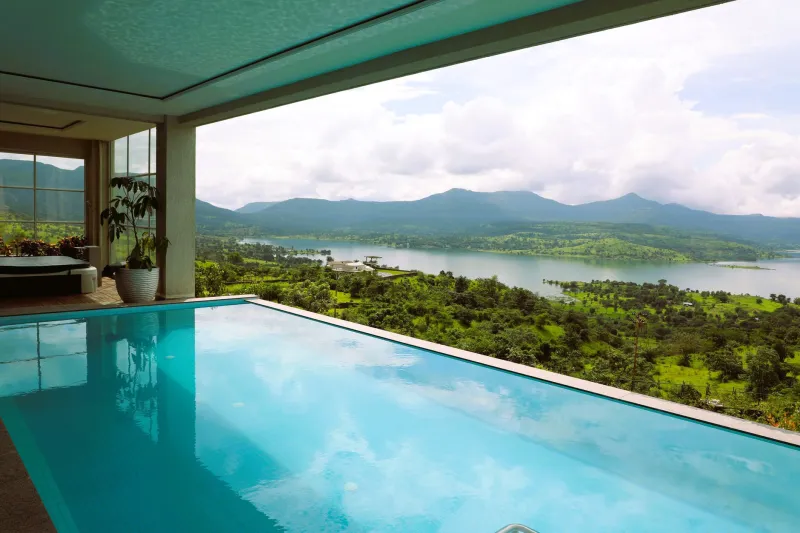
For a generation of affluent American travelers who came of age during the golden era of conspicuous luxury — the era of the butler-drawn bath and the suite with a private infinity pool overlooking a turquoise sea — the pivot toward experiential authenticity can feel disorienting. But the travel advisors who serve this market are unequivocal: the shift is not a passing trend. It is a fundamental reorientation of what luxury means.
"My clients spent years collecting superlatives," says one New York-based luxury travel consultant who manages portfolios for families with net worths well into nine figures. "The tallest building, the most remote island, the largest suite. At some point, the superlatives stopped meaning anything. What they want now is to feel something they haven't felt before — and increasingly, that means feeling like they're somewhere real."
The definition of "real," of course, is where things become complicated.
The Architecture of Organic Experience
Resort designers working at the very top of the market have spent the better part of the last decade wrestling with a question that would have seemed absurd to their predecessors: how do you engineer spontaneity? How do you build a property that costs hundreds of millions of dollars and still feels, to the guest standing in the village square at dusk, like an unmediated encounter with the world?
The answers emerging from the most ambitious projects are instructive. Properties in Oaxaca, the Peloponnese, and the highlands of northern Morocco are increasingly being constructed not merely within local communities but in genuine collaboration with them. Local artisans are not brought in for decorative effect — they are embedded in the guest experience itself. A stay might include a private session with the ceramicist whose work lines the property's corridors, or an afternoon in the studio of the weaver whose textiles appear in every room. The guest is not observing craft; they are, however briefly and however imperfectly, participating in it.
This is a meaningful distinction. Observation is tourism. Participation, even when it is arranged and facilitated by a $10,000-per-night resort, edges closer to the encounter these travelers are seeking.
What the Cooking Lesson Actually Costs
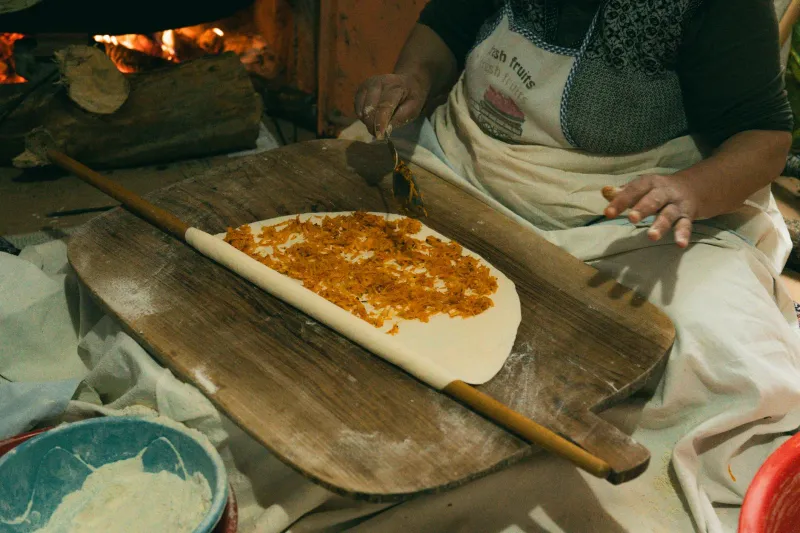
Perhaps no single amenity better captures the authenticity paradox than the private cooking lesson — that near-ubiquitous offering that has become, in certain circles, as expected as a well-stocked minibar once was. On its surface, the proposition is straightforward: a guest pays to learn a regional recipe from a local practitioner, often in a domestic kitchen, often accompanied by a market visit at dawn.
But the economics beneath the surface reveal how much invisible architecture supports the supposedly unmediated experience. The local practitioner has been vetted, briefed, and compensated at rates that reflect the expectations of a clientele accustomed to seamlessness. The market visit has been coordinated with vendors who understand the rhythm of a luxury itinerary. The ingredients have been pre-selected to ensure both authenticity and the absence of any variable that might introduce discomfort.
Is this authentic? The question is less important than it might appear. What matters to the traveler — and what the best properties understand with great sophistication — is that the emotional register of the experience feels unscripted. The grandmother whose kitchen they are standing in is, in fact, a grandmother. The recipe is, in fact, generations old. The conversation that unfolds over the rolling of pasta or the grinding of spices is, in fact, unrehearsed.
The scaffolding that makes this possible is invisible by design. And that invisibility is itself the product of considerable craft.
Cultural Access as the New Penthouse
Across the luxury travel advisory community, a consensus is forming around a simple but profound observation: access has replaced amenity as the primary currency of ultra-high-end travel. Not access to places — the world's most exclusive properties have always offered that — but access to people, to traditions, to knowledge systems that are not available to the general public regardless of budget.
This might mean a private audience with a master perfumer in Grasse, conducted after the atelier has closed to the public. It might mean joining a family's harvest in a centuries-old vineyard in Burgundy, not as a guest but as a participant. It might mean an evening with a constitutional scholar in Athens, walking through the ruins of the Agora and discussing the philosophical foundations of democracy as the sun sets behind the Acropolis.
These experiences share a quality that no suite upgrade can replicate: they are, by their nature, finite. They cannot be scaled. They cannot be franchised. The perfumer will not take a hundred guests per season. The vineyard family will not open their harvest to strangers more than once. This scarcity is not manufactured — it is inherent to the experience itself, which is precisely why it has become the most coveted offering in the market.
The Traveler Who Has Seen Everything
The psychological profile of the traveler driving this trend is worth examining. These are, almost without exception, individuals who have traveled extensively and well for decades. They have seen the canonical wonders. They have stayed in the canonical properties. They arrive at each new destination carrying the accumulated weight of prior experience, which means the bar for genuine surprise — for the feeling of genuine discovery — is extraordinarily high.
What they are seeking, at its core, is the sensation of being a traveler rather than a tourist. The distinction, as any seasoned wanderer knows, is not about geography or budget. It is about the quality of attention that the experience demands. A truly authentic encounter requires presence, curiosity, and a willingness to be changed, however slightly, by what one encounters. It cannot be delivered on a tray.
The most sophisticated luxury properties understand this. They are not in the business of providing experiences. They are in the business of creating conditions under which experiences become possible — and then stepping aside.
The Paradox Resolved, Imperfectly
The authenticity paradox will not be resolved cleanly, and perhaps it should not be. The tension between the comfort that ultra-luxury travelers expect and the rawness that genuine cultural encounter requires is productive. It keeps the industry honest. It demands continuous creativity from the designers, advisors, and local partners who make these experiences possible.
What is clear is that the travelers leading this shift are not naive about the contradictions they inhabit. They know that the grandmother's kitchen has been prepared for their arrival. They know that the dawn market visit has been coordinated. They accept these conditions and find, within them, something that still manages to feel true.
In the end, authenticity in ultra-luxury travel may be less about the absence of arrangement and more about the presence of genuine human exchange — the moment when the grandmother laughs at a mistranslation, when the fisherman points to a cloud formation and explains what the weather will do, when the weaver pauses and shows a guest the flaw in the textile she considers her finest work.
Those moments cannot be engineered. They can only be made possible. And making them possible, it turns out, is one of the most refined skills in modern hospitality.