The Informed Arrival: Why America's Most Discerning Travelers Are Mastering a Destination's History Before They Land

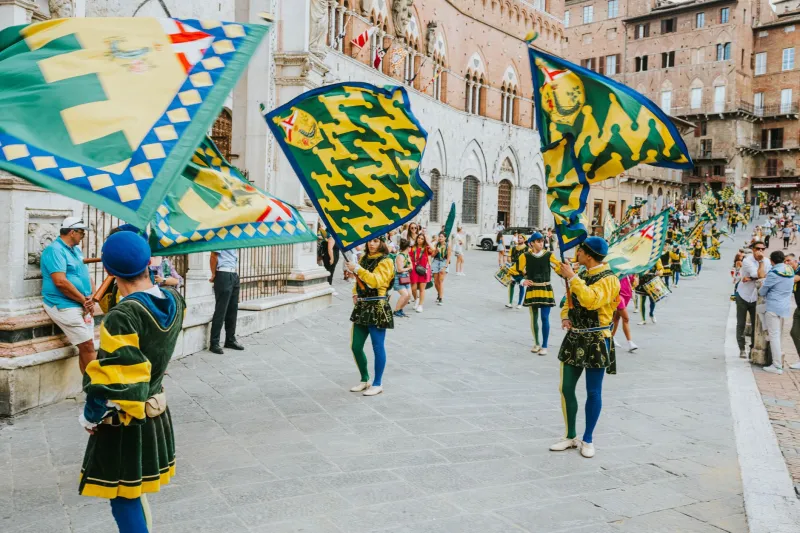
Photo by Photo by JAPG on Unsplash on Unsplash
There was a time when the most coveted quality a luxury destination could offer was escape—a clean severance from the familiar, an immersion in beauty without the burden of context. That era, for the most sophisticated segment of American travelers, has quietly drawn to a close.
In its place has emerged something more demanding, more intellectually rigorous, and ultimately more rewarding: the insistence on understanding a destination completely before setting foot within it. Call it the provenance instinct. The same impulse that leads a serious collector to trace a painting's ownership history across three centuries, or compels a sommelier to recite the precise microclimate conditions of a vineyard's most celebrated vintage, has migrated decisively into the realm of travel.
The question is no longer simply where one is going. It is what happened here, who shaped this place, and what does this landscape mean?
The Research as Ritual
For a growing cohort of high-net-worth American travelers, the weeks preceding departure have become as intellectually engaging as the journey itself. Private historians, cultural consultants, and specialist travel curators are now routinely engaged to construct what some in the industry are calling "destination dossiers"—comprehensive documents that trace a location's political evolution, architectural lineage, culinary heritage, and social mythology.
This is not casual guidebook browsing. These are structured, often months-long investigations that draw on academic sources, private archives, and the expertise of local scholars. A traveler preparing to visit the Cycladic islands of Greece, for instance, might commission research spanning Bronze Age trade routes, Ottoman administrative history, and the particular fishing traditions that gave each island its distinct culinary identity.
The preparation is not meant to replace discovery. Paradoxically, it deepens it. When one understands that a particular coastal village was the site of a pivotal merchant dynasty in the sixteenth century, a walk through its stone lanes becomes something closer to archaeology than tourism.
How Luxury Destinations Are Responding
The hospitality industry has taken careful notice. The most forward-thinking luxury resorts—particularly those operating in historically layered regions of Europe, the Middle East, and Southeast Asia—have begun restructuring their guest experience around the delivery of narrative context rather than mere physical comfort.
At properties in destinations such as Cappadocia, Kyoto's historic Higashiyama district, and the medinas of Morocco, concierge programs have been quietly elevated into something resembling curatorial departments. Resident historians are retained on staff. Private archive access is arranged. Pre-arrival reading lists, curated in collaboration with local universities, are dispatched to guests weeks before check-in.
The architectural fabric of the accommodation itself is increasingly treated as a primary text. Properties housed in converted Ottoman caravanserais, repurposed colonial-era estates, or meticulously restored medieval fortifications are not merely offering aesthetic distinction—they are offering the experience of inhabiting history directly.
For resorts that lack this kind of physical heritage, the pressure is considerable. The discerning traveler who arrives with a thorough understanding of a region's past will quickly identify the difference between an establishment that genuinely engages with its cultural context and one that merely deploys local motifs as decorative shorthand.
The Authenticity Premium
What this trend has introduced, with some force, is a new axis along which luxury is evaluated. Thread count, chef pedigree, and spa acreage remain relevant—but they now compete with something less tangible and considerably harder to manufacture: genuine cultural authority.
The resorts best positioned to meet this moment are those that have cultivated authentic relationships with the communities and histories surrounding them. Not transactional relationships—where local craft is purchased for lobby display—but substantive ones, where the property functions as a genuine steward of regional heritage.
This might manifest as a resort that funds the ongoing restoration of a nearby archaeological site. It might appear in the form of a culinary program developed in direct collaboration with the descendants of a region's oldest farming families. It might be as straightforward as a library stocked not with generic coffee-table volumes but with out-of-print regional histories and first-edition travel memoirs specific to that precise geography.
For American travelers accustomed to a marketplace that frequently conflates novelty with value, this shift represents something meaningful: the recognition that the most durable form of luxury is one that cannot be replicated, because it is rooted in something irreducibly real.
Meaning as the Ultimate Amenity
The provenance obsession, at its core, reflects a broader maturation in how affluent Americans conceive of travel itself. The aspiration is no longer simply to be somewhere beautiful. It is to understand somewhere beautiful—to carry home not just photographs and purchases but a genuinely expanded comprehension of the world.
This is, in the most precise sense, the luxury of meaning. And for the destinations and resorts sophisticated enough to offer it with integrity, the rewards are considerable. Guests who arrive informed become guests who return devoted—not because the pool was exceptional or the service impeccable, but because the experience gave them something no other destination could replicate: a story that is now, irrevocably, part of their own.