The Invisible Architect: How Elite Hospitality Is Using Guest Intelligence to Engineer Perfect Moments
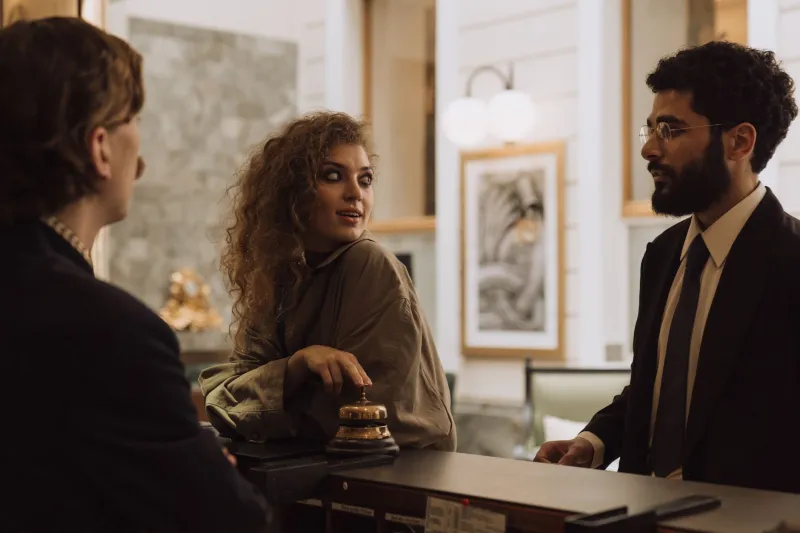
You arrive at your suite after a long transatlantic flight. Before you have unpacked, there is already a glass of still water — not sparkling, which you never drink — on the nightstand, alongside a small dish of the specific variety of dark chocolate you mentioned offhandedly in a preference survey eighteen months ago. The room temperature is precisely 68 degrees. The reading light beside the chair has been adjusted to the warm spectrum you favor. A handwritten note from the concierge references, by name, the hiking trail you explored on your last visit to this region, and suggests a variation you have not yet attempted.
You did not request any of this. You were not asked. It simply appeared, as though the property had been quietly paying attention to you for years.
In a very real sense, it has.
The Architecture Behind the Spontaneity
What feels like intuition — the defining quality that separates the world's most extraordinary hospitality experiences from merely excellent ones — is increasingly the product of systems that are anything but accidental. Across the upper tier of global luxury travel, properties and the concierge services that serve their guests have built sophisticated infrastructures of guest intelligence that transform accumulated data into what feels, to the recipient, like genuine human attentiveness at an almost uncanny scale.
The mechanics vary by property, but the underlying logic is consistent. Every interaction a guest has with a luxury brand — from the initial booking inquiry to the post-stay survey, from the room service order to the spa treatment selection — generates a data point. Individually, these data points are unremarkable. Assembled over time, cross-referenced, and interpreted by a combination of algorithmic processing and the trained judgment of senior hospitality staff, they constitute something far more valuable: a portrait of a person.
Not a demographic profile. Not a spending tier. A portrait — with preferences, rhythms, sensitivities, and desires that are as individual as a fingerprint.
From Guest History to Guest Intelligence
The hospitality industry has always kept guest notes. The great hotels of an earlier era maintained card files — handwritten records of returning guests' preferences, allergies, and personal details, maintained by head butlers and general managers who understood that memory was a form of respect. A guest remembered was a guest honored.
What has changed is the scale, the precision, and the predictive capacity of these systems. Where a hand-maintained guest file might capture a dozen meaningful data points, contemporary guest intelligence platforms at leading luxury properties capture hundreds — and, crucially, they analyze relationships between those data points that no individual staff member could perceive.
A guest who consistently books corner suites, orders room service rather than dining in restaurants on the first evening of any stay, and requests late checkout after stays exceeding five nights is not simply a guest with preferences. They are a guest with a legible pattern — one that reveals something about how they decompress, how they transition between the public and private dimensions of travel, and what they need from a property to feel genuinely at ease. A well-designed system surfaces that pattern and translates it into operational preparation before the guest arrives.
Luxury travel concierge services operating at the highest level in the United States have taken this further still. The most sophisticated among them maintain what might be described as living guest profiles — continuously updated documents that integrate not only hospitality history but also information drawn from conversations, observed preferences during travel, and even broader context about a client's life circumstances, professional demands, and personal milestones. When a client's child is approaching college graduation, a thoughtful concierge anticipates the celebratory travel conversation before it is initiated. When a client has recently navigated a demanding professional period, the next journey may be curated with an unusual emphasis on restoration and privacy.
The Human Layer That Data Cannot Replace
For all the sophistication of these systems, the most perceptive voices within luxury hospitality are careful to distinguish between data and understanding. The former is a tool. The latter is a craft — and it requires human practitioners who know how to interpret what the data is actually saying, and when to trust what it cannot say.
This is the paradox at the heart of data-driven personalization in luxury travel: the most powerful use of guest intelligence is to enable human beings to be more human. When a concierge is not spending cognitive energy trying to recall whether a guest prefers a particular pillow configuration, that mental capacity is freed for the more nuanced work of genuine attentiveness — reading the room, sensing when a guest wants conversation and when they want to be beautifully left alone, making the judgment call that no algorithm can reliably make.
The properties that execute this balance most gracefully are those that treat their data systems as infrastructure rather than performance. The technology is invisible. The staff it empowers are not. The guest experiences the human warmth and never consciously registers the architecture that makes it possible — which is, of course, exactly as it should be.
Privacy, Trust, and the Unspoken Compact
For affluent American travelers, the question of what is being collected, retained, and potentially shared is one that sophisticated hospitality brands have learned they must address with transparency and discretion in equal measure. The same guests who most deeply appreciate hyper-personalized service are often those with the most acute sensitivity to how their information is handled.
The leading properties in this space have responded by establishing what amounts to an unspoken compact with their guests: the information you share with us, whether explicitly or through your behavior in our care, will be used exclusively in your service and protected with the same discretion we extend to every dimension of your stay. This is not merely a privacy policy. It is a statement of values — and guests who trust it reward that trust with extraordinary loyalty.
The most forward-thinking luxury brands have also recognized that personalization reaches its limit at the boundary of surprise. A guest who senses that every moment has been engineered may feel not cared for, but managed. The art lies in using intelligence to create the conditions for genuine spontaneity — to position the right elements such that the guest's own discovery feels authentically theirs.
The Future of Knowing You
As artificial intelligence becomes more deeply embedded in hospitality operations, the predictive capacity of guest intelligence systems will grow considerably more refined. Properties are already experimenting with real-time preference calibration — systems that adjust ambient conditions, staffing posture, and service sequencing in response to behavioral signals observed during a stay, not just accumulated from previous ones.
But the most thoughtful practitioners in luxury hospitality are clear-eyed about what technology can and cannot achieve. It can remember everything. It can identify patterns invisible to the human eye. It can surface the right bottle of wine before the guest knows they want it.
What it cannot do is replace the quality of presence — the quality of a staff member who has genuinely internalized a guest's preferences not as data points, but as the contours of a person they have come to know and care for. The future of luxury hospitality will belong to properties that use extraordinary technology to make extraordinary human service possible. The goal, as it has always been, is not to impress a guest with what you know about them. It is to make them feel, in the quietest and most profound way, that they have been truly seen.