The New Longevity Estates: Inside the Ultra-Private Wellness Sanctuaries Redefining Health for America's Most Affluent
The conversation about wellness among America's affluent class has undergone a quiet but seismic transformation. Where previous generations might have marked a significant birthday with a week at a Caribbean spa—massages, meditation, perhaps a nutritionist consultation—today's ultra-high-net-worth traveler arrives at their wellness retreat with a different set of expectations entirely. They come not simply to rest but to be comprehensively understood, biologically speaking, and to leave with a precision-engineered program for extending their healthspan with the same rigor they might apply to managing a portfolio.
The facilities that serve this clientele occupy a category that did not meaningfully exist a decade ago. They are neither hospitals nor spas, though they incorporate the finest elements of both. They are, in the truest sense, estates of longevity—private sanctuaries where clinical excellence and uncompromising luxury coexist without apology.
What Separates a Longevity Sanctuary from a Wellness Resort
The distinction matters, and the finest operators are careful to articulate it. A conventional luxury wellness resort—however exceptional its thermal pools, however accomplished its culinary team—is fundamentally oriented around comfort and recovery. A longevity sanctuary, by contrast, begins with a medical premise: that the body, properly understood and supported, can perform at a significantly higher level for a significantly longer time, and that achieving this requires data, expertise, and highly individualized intervention.
Guests at these facilities typically begin their stay with what might be described as a comprehensive biological audit. Over the course of one to three days, they undergo an extensive panel of advanced diagnostics: full-genome sequencing, continuous metabolic monitoring, advanced cardiovascular imaging, detailed hormonal profiling, microbiome analysis, and cognitive performance assessments. The results are reviewed by a multidisciplinary team of physicians—often including specialists in functional medicine, endocrinology, neurology, and sports science—who then design a program tailored with extraordinary specificity to the individual.
The program that follows may span anywhere from one to several weeks and might include intravenous nutrient therapies, hyperbaric oxygen sessions, photobiomodulation treatments, personalized movement protocols developed by elite-level physiotherapists, sleep optimization interventions, and carefully calibrated nutritional programming. Each element is documented and monitored, with adjustments made in real time as data from continuous wearable devices flows back to the clinical team.
The Estates Themselves: Where Medicine Meets Architecture
What distinguishes these retreats from clinical environments—and what justifies their extraordinary cost, which can range from $5,000 to over $30,000 per day depending on the facility and program scope—is the physical environment in which this medicine is delivered.
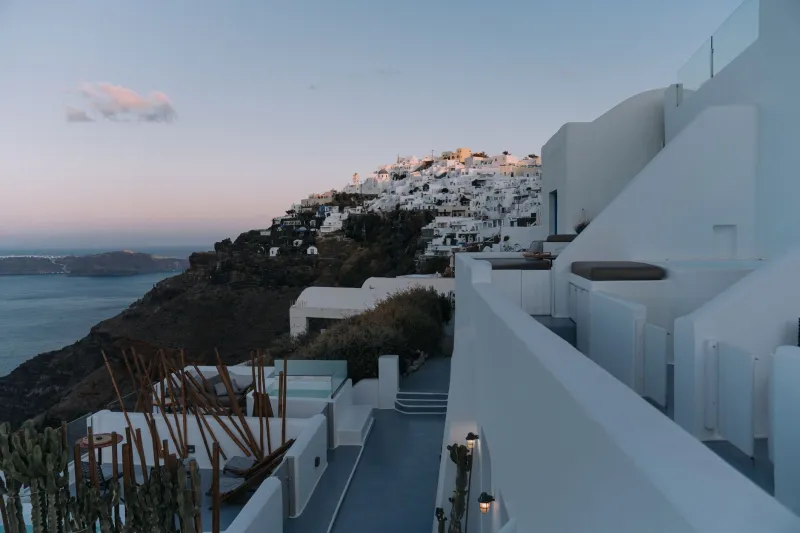
The leading sanctuaries are, without exception, architecturally remarkable properties. One celebrated facility situated on a private coastal bluff in Southern California occupies a compound of low-slung pavilions connected by gardens of native California plantings, with treatment suites that open directly onto ocean views. Another, located in the Austrian Alps, operates within a sensitively restored nineteenth-century estate where guest suites feature hand-carved stonework, private terraces overlooking mountain meadows, and in-room diagnostic monitoring equipment discreetly integrated into the furniture design.
The culinary dimension at these properties deserves particular mention. Menus are developed by accomplished chefs working in close collaboration with the medical team—dishes designed not simply to satisfy but to support the specific metabolic objectives of each guest's program. The result is food that manages, remarkably, to be both deeply nourishing in a clinical sense and genuinely pleasurable in a gastronomic one. Seasonal ingredients sourced from estate gardens or local artisan producers are the norm; the kitchen operates as an extension of the therapeutic program rather than a separate amenity.
Discretion as a Core Amenity
Among the guests who frequent these sanctuaries—and they tend to be repeat visitors, returning annually or semi-annually as part of a long-term health strategy—privacy ranks alongside clinical quality as a non-negotiable requirement. The social profile of the clientele is such that proximity to other guests must be carefully managed. Capacity at the finest facilities is deliberately limited: many accept no more than eight to twelve guests simultaneously, ensuring that encounters with fellow visitors are minimal and that the property never feels crowded.
Communications policies at these retreats are notably strict. Many request that guests refrain from sharing their location on social platforms during their stay. Staff operate under comprehensive non-disclosure frameworks. The facilities themselves are rarely listed on conventional travel booking platforms and accept new guests almost exclusively through referral.
This discretion is not merely about celebrity or public-profile concerns, though those are real. It reflects a deeper truth about the nature of the experience: the vulnerability required to undergo comprehensive medical assessment and to work genuinely toward physical and cognitive optimization is not well served by an environment that feels performative or observed. The sanctuary, to function as intended, must feel genuinely private.
The Longevity Economy and Its Discontents
Not everyone regards the rise of ultra-luxury longevity medicine with unqualified enthusiasm. Critics within the broader wellness and medical communities have raised questions about the evidential basis for certain interventions offered at premium price points—noting that the line between clinically validated protocols and commercially motivated wellness theater can sometimes be difficult to discern from the outside.
The most reputable facilities address this directly. Several have established academic advisory boards that include researchers from leading American universities and medical centers. Others publish outcome data—carefully anonymized—and submit their protocols to independent review. The best operators are transparent about what the science supports and what remains in the realm of emerging or experimental practice, and they communicate this distinction clearly to prospective guests.
For those seeking to evaluate these retreats, the presence of board-certified physicians in leadership roles, affiliations with recognized academic medical institutions, and a willingness to share clinical methodology are meaningful indicators of seriousness.
Planning a Longevity Retreat: Practical Considerations
Accessing the finest longevity sanctuaries typically requires advance planning of three to six months, particularly for first-time guests whose intake process—including preliminary medical questionnaires, pre-arrival bloodwork, and consultations with the clinical team—begins well before arrival. A luxury travel advisor with established relationships in this space can be invaluable in navigating the referral process and ensuring that the program recommended aligns with a guest's specific health objectives.
For American travelers, international options in Switzerland, Austria, and select Caribbean jurisdictions offer the additional benefit of access to therapeutic modalities not yet available domestically. Domestic options, concentrated in California, Colorado, and the Florida Gulf Coast, offer the convenience of accessibility without international travel complexity.
A New Definition of the Restorative Escape
The longevity sanctuary represents, in many respects, the logical endpoint of a cultural trajectory that has been building for years: the elevation of health from a private concern to a central organizing principle of the affluent American life. What has changed is the sophistication of the tools available, the quality of the environments in which they are deployed, and the seriousness with which a growing segment of wealthy Americans is approaching the project of their own longevity.
In this context, the week spent at a longevity estate is not an indulgence separate from life's other priorities. It is, for many who undertake it, among the most considered investments they make—in time, in resources, and in the quality of the years that follow.