The Power of the Polite Refusal: How the World's Most Discerning Travelers Are Curating Exclusivity Through Strategic Restraint

There is a particular kind of confidence that announces itself not through acquisition, but through abstention. In the rarefied corridors of the world's finest resorts — from the cliffside retreats of the Amalfi Coast to the discreet lodges of Montana's Beartooth Range — a new archetype of the luxury traveler has emerged. This individual does not arrive with a list of demands. They arrive with a list of graceful refusals.
For a generation of American ultra-high-net-worth travelers accustomed to being offered everything, the act of saying no has become, paradoxically, the most sophisticated thing one can do.
The Overcuration Problem
The luxury hospitality industry spent the better part of two decades competing on abundance. Spas expanded their treatment menus to dozens of offerings. Butler services multiplied their touchpoints. Welcome amenities grew from a chilled bottle of champagne to elaborate tableaux of locally sourced delicacies, monogrammed robes, and curated reading selections. The implicit message was always the same: more is the measure of excellence.
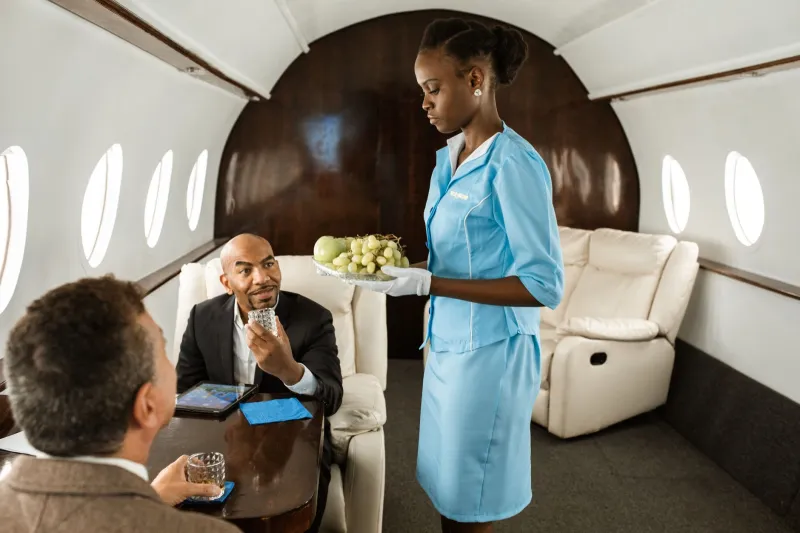
But something shifted. Quietly at first, then with unmistakable momentum, the most discerning guests began pushing back — not with complaints, but with polite, firm declinations. They declined the welcome call. They declined the twice-daily turndown. They declined the complimentary tasting menu in favor of a single, perfectly prepared dish eaten in silence on their private terrace.
What the industry initially interpreted as indifference was, in fact, a highly deliberate curation. These guests were not disengaged. They were exercising the most refined form of personal sovereignty available to them: the freedom to shape their own experience by subtracting, rather than adding.
When Restraint Signals Refinement
In American culture, where abundance has long been equated with success, the willingness to refuse what others covet carries a particular social weight. The executive who turns down a table at an oversubscribed restaurant — not because they cannot secure it, but because they simply prefer the quiet of their suite — communicates something that no reservation confirmation ever could. They are not performing access. They are practicing discernment.
This behavioral shift has not gone unnoticed by the hospitality world's most perceptive operators. General managers at several of the world's leading properties have observed that their most valuable guests — those who return year after year, who generate the most meaningful word-of-mouth, and who form the deepest loyalty to a property — are often those who engage with the fewest amenities. They know precisely what they came for, and they protect that intention with quiet resolve.
The psychology is instructive. When a traveler has genuinely unlimited options, the act of choosing becomes its own burden. The freedom to decline is, therefore, not a rejection of luxury — it is its purest expression.
How Ultra-Luxury Properties Are Adapting
Forward-thinking resorts are not merely tolerating this trend. They are redesigning their entire service philosophy around it.
The most progressive properties have moved away from the default opt-in model — where guests receive everything unless they ask otherwise — toward what hospitality insiders are beginning to call the preference-first approach. Before arrival, guests are invited to indicate not only what they want, but what they would prefer to do without. Do they wish to be greeted at the door, or would they prefer to find their suite in undisturbed readiness? Would they like daily activity suggestions, or would they prefer that the concierge remain available but invisible?
The result is an experience that feels, above all else, personal — not in the performative sense of monogrammed everything, but in the deeper sense of genuine respect for individual rhythm and preference.
Some properties have gone further still. A number of ultra-private estates operating under the radar in the American Southwest and along the Pacific Coast now present arriving guests with what staff internally refer to as the "subtraction menu" — a discreet document inviting guests to remove any element of the standard experience that does not serve their particular vision of the stay. The document is brief, elegant, and entirely without judgment. Its existence alone communicates something profound: your peace matters more than our performance.
The Social Architecture of Selective Engagement
Beyond the resort itself, strategic refusal is reshaping how the elite traveler moves through the broader landscape of luxury opportunity. Invitations to exclusive events, private previews, members-only gatherings — these once represented the apex of the luxury travel experience. To be invited was to have arrived.
Today, the calculus is more nuanced. The most sophisticated travelers have come to understand that the relentless pursuit of every exclusive experience is, in itself, a form of exhaustion. There is a kind of status anxiety embedded in the compulsion to attend everything one is invited to — a subtle suggestion that the invitation, rather than one's own judgment, is the authority.
Deciding which invitations to honor, and which to decline with a gracious note, has become an art form in its own right. It requires self-knowledge, clarity of purpose, and the social confidence to let an extraordinary opportunity pass without regret. These are not qualities that can be purchased. They must be cultivated.
The Deeper Luxury
At its heart, the movement toward strategic refusal is about something more fundamental than hospitality trends or social signaling. It is about the reclamation of interiority — the insistence that one's inner life, one's sense of pace, one's particular vision of a perfect day, cannot be outsourced to even the most attentive resort staff or the most glittering itinerary.
The travelers who have mastered this art are not ascetics. They still seek beauty, comfort, and the particular pleasure of being exceptionally well looked after. But they have learned to distinguish between what genuinely nourishes them and what merely performs the idea of luxury back at them.
In a world where almost anything can be arranged, almost anywhere, for the right price, the rarest thing a traveler can possess is a clear sense of what they actually want — and the poise to decline everything else.
That, in the end, is the truest measure of arrival.