Seen on Your Own Terms: The Sophisticated Traveler's New Mastery of Presence and Discretion
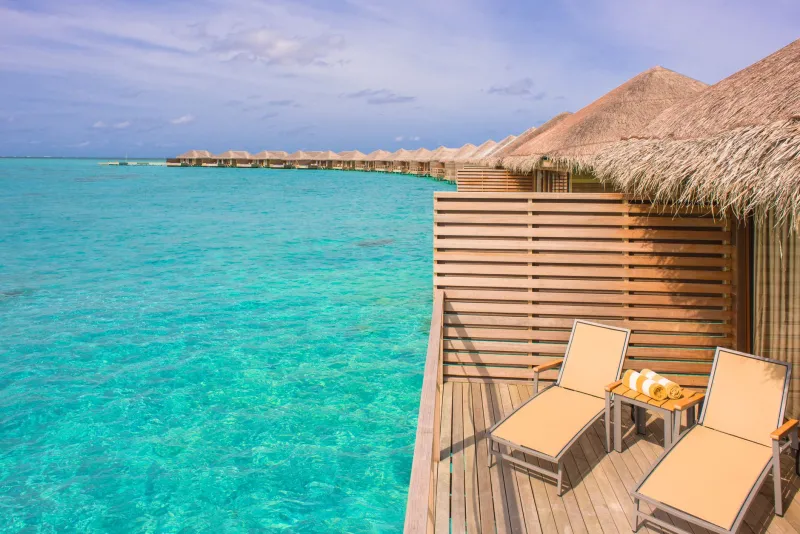
There is a particular kind of power in choosing when to be found. For the world's most accomplished travelers — those who move between Anguilla and Aspen, between Kyoto's ryokans and the private villas of the Algarve — the question is no longer simply where to go, but how to be seen arriving there. Visibility, once a byproduct of wealth, has become a deliberate instrument. And the most sophisticated among the traveling elite have learned to wield it with the same precision they bring to every other aspect of their curated lives.
This is the paradox that defines a new era of luxury travel: the desire to be discoverable — to signal taste, achievement, and refinement — coexisting with an equally powerful desire for genuine privacy. Navigating that tension is no longer left to chance. It is, increasingly, a managed art form.
The Architecture of Selective Presence
For many affluent American travelers, the shift began with a growing discomfort around the performative nature of travel documentation. The era of conspicuous luxury — the Instagram-ready infinity pool shot, the ostentatious suite reveal — has given way to something quieter, more considered, and ultimately more powerful.
Luxury brand strategists describe this evolution as a move from display to implication. Rather than broadcasting the price of an experience, the most tasteful communicators suggest its rarity. A photograph of a hand-thrown ceramic cup against a weathered stone wall in Provence communicates more to the right audience than any tagged resort property ever could. It is the visual equivalent of a knowing glance — legible only to those with the cultural fluency to interpret it.
This aesthetic, often described as "quiet luxury" in broader cultural conversations, finds its fullest expression in travel. The restraint is intentional. The selectivity is the message.
How Elite Resorts Are Engineering the Narrative
Forward-thinking properties around the world have recognized that their most valued guests are not simply seeking beautiful rooms and impeccable service. They are seeking control — specifically, control over how their presence at a given destination is perceived and communicated.
Some of the most exclusive resorts in the Caribbean, the Mediterranean, and the American West now offer what might be called narrative concierge services: a discreet collaboration between guest and property to shape the story that emerges from a stay. This might involve guidance on which common spaces offer the most considered backdrops for personal documentation, which experiences are best left entirely off the record, and how the property itself manages any external visibility — paparazzi access, social media tagging policies, and the handling of guest identities in the event of press inquiries.
One prominent travel concierge firm operating across New York, Los Angeles, and Miami describes the service as "reputation architecture." Their clients, they note, include executives, public figures, and high-net-worth individuals who understand that a single unguarded image in the wrong context can unravel years of carefully maintained positioning. The goal is not invisibility — it is curated visibility, the deliberate construction of a public footprint that reflects exactly what the traveler wishes to communicate.
The Platforms That Matter — and Those That Don't
The democratization of social media has created an unexpected consequence for the ultra-affluent: the platforms that once conveyed exclusivity have become too accessible to retain their signaling power. As a result, a quiet migration is underway toward more selective digital spaces — private networks, invitation-only communities, and semi-closed forums where membership itself is the credential.
Within these spaces, the etiquette of travel visibility operates under different rules. Sharing is expected, but excess is penalized by social consequence rather than algorithm. A single, extraordinarily composed image from a remote Fijian archipelago carries more weight than a daily diary of a more accessible destination. The audience is smaller, but its approval is exponentially more valuable.
Travel advisors who serve this clientele have become fluent in the nuances of platform strategy. They advise on timing — when to share and when to maintain deliberate silence — and on the subtle distinctions between documentation that invites admiration and documentation that invites intrusion. The difference, they note, is rarely about the image itself. It is almost always about the intent behind it.
Anonymity as a Luxury Amenity
At the most exclusive end of the market, anonymity has emerged as perhaps the most coveted amenity of all. Properties that once competed on the grandeur of their public spaces are now investing heavily in the infrastructure of discretion: private entrances, unmarked vehicles, staff trained in the art of protective confidentiality, and check-in processes that bypass any public-facing lobby entirely.
In high-profile destinations — New York, Miami, Los Angeles, and internationally in cities like Paris and Dubai — luxury hotels are increasingly segmenting their guest experience to allow for radically different levels of visibility within the same property. A guest may occupy a suite accessible only by private elevator, dine in a room that does not appear on any public menu, and depart through an exit known only to a handful of staff members. The experience is seamless precisely because its architecture is invisible.
This investment in structural anonymity is not merely a service offering. It is a statement about the property's understanding of what its most valued guests truly require. And for those guests, the knowledge that a property has considered and solved for their privacy needs — without being asked — is itself a signal of exceptional quality.
The New Etiquette of Tasteful Visibility
What emerges from conversations with luxury travel advisors, brand strategists, and the travelers themselves is a portrait of a new social compact. The rules are unwritten but widely understood within the relevant communities: visibility is permissible, even desirable, when it is purposeful, restrained, and reflective of genuine taste. It becomes a liability when it appears desperate, excessive, or uncontrolled.
The most sophisticated travelers, in this framework, are those who understand that true prestige is not broadcast — it is recognized. A destination does not need to be named if it is identifiable to those who have been there. An experience does not need to be described if its quality is self-evident in the quality of its documentation.
For those navigating this landscape for the first time, the guidance from those who have mastered it is consistent: invest more in the experience than in its representation, trust that the right audience will find you, and resist the impulse to explain what the image already communicates.
In an era defined by information abundance, the most powerful thing a sophisticated traveler can do is say less — and mean everything.