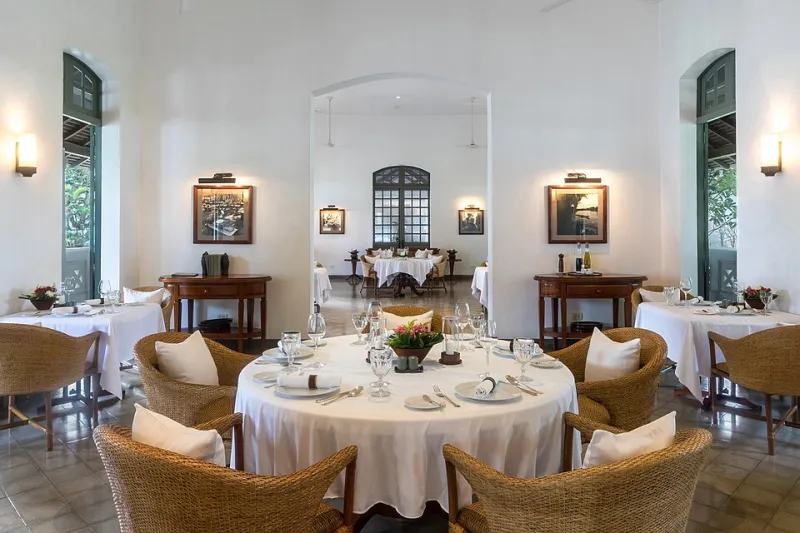
Rooted in Another World: How America's Most Intentional Travelers Are Planting Lives in Destinations That Claim Their Hearts
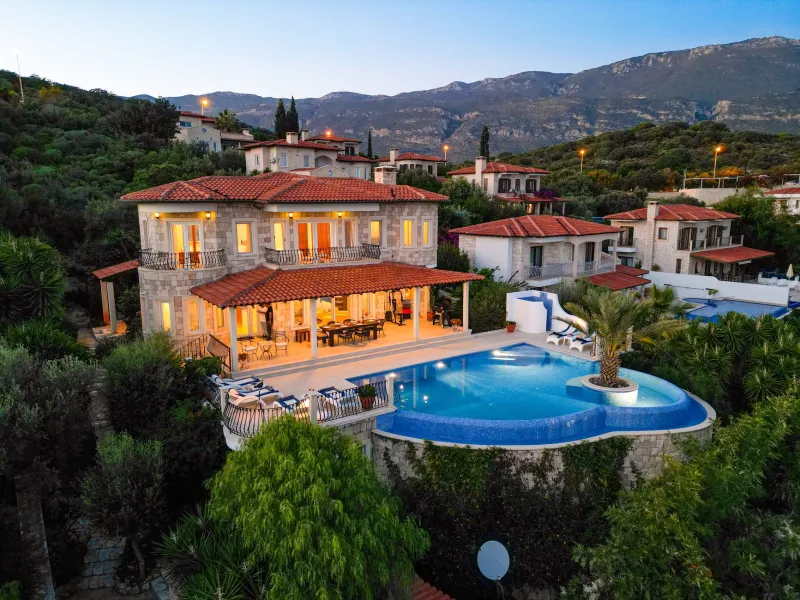
There is a particular moment that seasoned travelers describe with surprising consistency. It arrives not at the peak of a first visit — not during the golden-hour photograph or the revelatory meal — but somewhere deep into a third or fourth return. The café owner greets you by name before you reach the counter. The concierge has already arranged the boat you haven't yet requested. The light on the water looks, somehow, like yours. That moment is not tourism. It is the quiet beginning of belonging.
Across the landscape of American luxury travel, a meaningful reorientation is underway. The restless accumulation of destinations — the passport filled, the continents checked — is giving way to something more considered, more emotionally ambitious. A growing cadre of affluent US travelers is no longer asking where to go next. They are asking where to go back. And they are going back not as returning guests, but as nascent residents: people who have chosen a place not merely to visit, but to inhabit.
The Shift From Itinerary to Identity
For much of the past two decades, luxury travel was defined by breadth. The aspiration was range — Patagonia one spring, the Maldives the next, a private island somewhere in between. Status was measured in novelty, and the well-traveled life was understood as a life in perpetual motion.
That model is being quietly, deliberately dismantled by a segment of travelers who have discovered something the frequent-flier calculus never accounted for: depth is more nourishing than distance. Returning to the same place — a coastal village in the south of France, a highland estate in Portugal's Douro Valley, a resort peninsula in Mexico's Riviera Maya — with sufficient frequency and intention transforms the experience entirely. The destination ceases to be a backdrop and becomes a relationship.
This is not mere sentimentality. Behavioral researchers who study travel psychology have long noted that the sense of place-attachment — the emotional bond between a person and a specific geography — produces measurable effects on well-being, identity, and even creativity. For affluent Americans accustomed to engineering every other dimension of their lives with precision, the deliberate cultivation of a second home base abroad represents a logical, if deeply personal, optimization.
How Elite Resorts Are Evolving to Meet This Demand
The hospitality industry's most forward-thinking operators have recognized this shift and are responding with structural changes that go well beyond extended-stay discounts. The finest resorts now speak openly about building what one general manager in the Algarve recently described as "a community of returning souls" — guests who arrive not with the energy of discovery but with the ease of return.
This evolution manifests in several forms. Residency programs at ultra-luxury properties now offer not just extended accommodation but genuine integration into the fabric of the estate. Guests who commit to multiple months across a calendar year may find themselves with a dedicated suite whose furnishings have been subtly personalized over successive visits — a curated library, a preferred botanical in the garden terrace, a standing reservation at the chef's table that requires no booking because it was never released.
Beyond the physical, these properties are investing in what might be called social architecture: the deliberate facilitation of relationships among long-term guests. Private dinners curated not by dietary preference but by intellectual affinity. Introductions brokered between a New York philanthropist and a Lisbon architect who share a passion for pre-Columbian art. The resort, in this model, becomes less a hotel and more a salon — a place where one's social world expands in proportion to one's commitment to return.
The Psychology of Choosing a Place
What draws a person to claim a particular corner of the world as their own? The answers, it turns out, are rarely practical. Proximity to an airport, favorable tax arrangements, a robust expatriate community — these factors may confirm a choice, but they seldom initiate it. The travelers who have built second lives in places far from their American home base tend to describe the original pull in almost ineffable terms: a quality of light, a pace of daily life, a sense that the local culture mirrors something they have always known about themselves but rarely found reflected at home.
A retired technology executive from San Francisco who now spends four months each year at a private estate resort in Umbria describes it this way: "I stopped trying to explain it rationally. The place simply asked something of me that I wanted to give. The slowness, the ceremony around the table, the way the hills look at dusk — it felt like a version of myself I'd been postponing."
This language of self-recognition recurs with striking frequency among those who have made this commitment. The destination becomes not an escape from identity but an extension of it — a place where a particular, often quieter, version of oneself is most fully expressed.
Building a Life, Not Just a Stay
The logistics of quasi-residency have become considerably more navigable in recent years, and the most sophisticated travel advisors now specialize in structuring what they term "rooted luxury" — a framework that combines long-stay accommodations with introductions to local communities, language immersion, participation in regional cultural institutions, and even advisory roles within local philanthropic efforts.
For some, this takes the form of a seasonal rhythm: winters in a private-access resort in the Caribbean, springs committed to a beloved property in the Italian lakes. For others, the commitment is more singular — one place, returned to with increasing depth, until the distinction between guest and resident blurs entirely.
The finest properties facilitating this transition understand that their role has expanded well beyond hospitality in the conventional sense. They are stewards of a life, not merely providers of a room. That responsibility demands a different kind of staff training, a different philosophy of service, and a genuine understanding that the guest who has chosen to belong deserves to be treated as someone who already does.
The Quiet Revolution in What Luxury Means
At its core, this trend represents a fundamental reimagining of what luxury travel is for. If the previous era celebrated the freedom to go anywhere, the emerging one celebrates the courage to stay — to resist the pull of novelty in favor of the richer rewards of return. To allow a place to know you, and to know it in kind.
For the American traveler who has spent a career building a life of achievement and acquisition, there is something quietly radical about choosing a single olive grove, a particular harbor, a familiar face behind a particular bar, and declaring: this is enough. This is, in fact, everything.
Bellapais Deluxe continues to track this evolution with the attention it deserves — because the geography of belonging is not a niche preference. It is, increasingly, the most sophisticated form of travel there is.