Spaces That Listen: How the World's Most Visionary Resorts Are Engineering Environments That Respond to the Soul
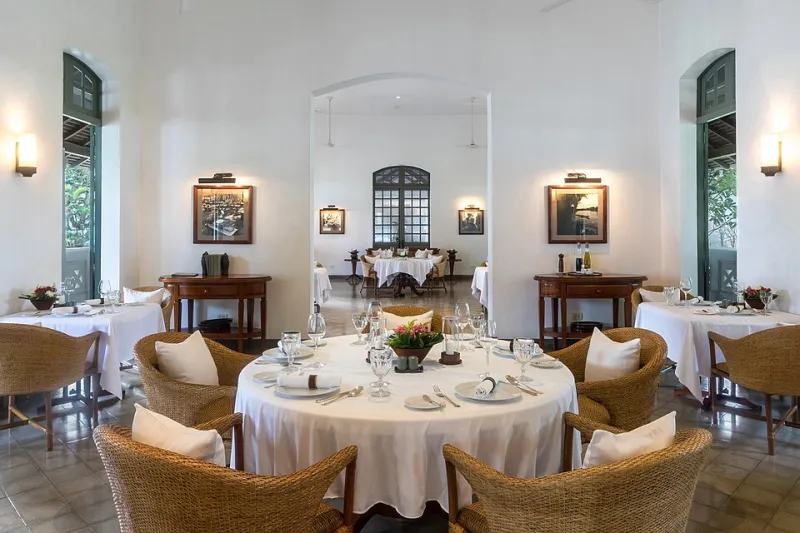
Photo: Basile Morin, CC BY-SA 4.0, via Wikimedia Commons
There is a particular kind of exhaustion that no thread count can remedy. It arrives not in the body but somewhere deeper — a low-frequency fatigue accumulated across months of high-stakes decisions, relentless schedules, and the particular loneliness that sometimes accompanies extraordinary success. For decades, the luxury hospitality industry addressed this condition with the same reliable toolkit: a larger suite, a better view, a more attentive butler. The most visionary properties in the world have quietly concluded that this approach, however exquisitely executed, is no longer sufficient.
What is emerging in its place represents perhaps the most significant philosophical shift in elite hospitality since the concept of personalized service was first codified. The world's most exclusive resorts are now employing environmental psychologists, spatial neuroscientists, and behavioral architects — professionals whose work begins not with aesthetics but with the architecture of human feeling. Their mandate is both ambitious and intimate: to design physical spaces that anticipate and respond to guests' emotional states before those guests are even conscious of what they need.
The Science Beneath the Surface
For the uninitiated, the discipline of environmental psychology may sound like an academic abstraction with little bearing on the practical business of hospitality. In practice, it is anything but. The field examines how physical environments — their geometry, acoustics, light quality, material texture, and spatial proportion — exert measurable influence on human neurological and emotional states. Its findings are precise enough to be actionable and profound enough to be transformative.
Leading this charge are properties that have commissioned bespoke research rather than simply consulting existing literature. One celebrated resort in the Swiss Alps recently engaged a team of researchers from a Zurich-based cognitive science institute to study the neurological responses of guests across different areas of the property. The findings were granular and, to the uninitiated, surprising: corridor widths as slight as eight inches narrower than the property's standard created measurable upticks in cortisol. Ceiling heights in the primary dining room, though architecturally impressive, were subtly undermining the sense of intimate warmth the culinary team worked so hard to cultivate at the table.
The resort's response was not a renovation so much as a recalibration — adjustments to spatial ratios, the introduction of carefully positioned alcoves that allowed guests to feel simultaneously part of a grand space and privately sheltered within it. Return guests noticed something had changed without being able to articulate precisely what. That ambiguity, the designers noted, was entirely intentional.
Light as Language
If spatial geometry is the grammar of environmental design, light is its most expressive vocabulary. The most sophisticated resorts have moved far beyond the warm-versus-cool binary that has long governed hospitality lighting. They are now deploying dynamic systems that shift not only in color temperature but in frequency, intensity, and directionality according to the time of day, the season, and — in the most advanced implementations — the known preferences and behavioral patterns of individual guests.
A private island property in the Maldives, accessible to fewer than forty guests at any given time, has installed a lighting architecture that responds to biometric data gathered through wearable wellness devices offered upon arrival. When a guest's data suggests elevated stress markers — elevated heart rate, disrupted sleep patterns from long-haul travel — the lighting in their villa shifts automatically toward frequencies associated with parasympathetic nervous system activation: warmer, lower, gentler, with a particular amber quality that neurological research associates with a sense of safety and enclosure.
The guest experiences this not as an intervention but as an atmosphere. They feel, without knowing precisely why, that the space around them is somehow on their side.
The Geometry of Recovery
Beyond light, the most progressive properties are rethinking the fundamental geometry of their spaces in ways that challenge long-held assumptions about what luxury looks like. The panoramic view — that great symbol of elevated status, the wide glass wall commanding an unbounded horizon — is being reconsidered. Environmental psychologists have noted that for guests arriving in states of high stimulation or anxiety, the unbounded vista can amplify rather than soothe. The feeling of being exposed to infinite space, without the psychological counterweight of enclosure, can leave certain guests feeling subtly unmoored.
Several resorts have responded by designing what their architects call "prospect and refuge" spaces — environments that simultaneously offer expansive views and intimate shelter. A new ultra-private property on the Big Island of Hawaiʻi features suites where the primary living area is anchored by a low, canopied ceiling section positioned just behind the main viewing glass. Guests instinctively gravitate toward this sheltered position when they want to contemplate the Pacific — experiencing the view's grandeur while held, neurologically, by the sense of protective enclosure behind them. The design is drawn directly from evolutionary psychology, which identifies this combination as one of the environments humans find most instinctively restorative.
Material Memory and Sensory Continuity
The sophistication extends to material selection in ways that transcend conventional notions of quality. Ultra-luxury properties are increasingly engaging specialists in haptic psychology — the study of how texture and physical contact influence emotional states — to curate the tactile experience of a space with the same rigor once reserved for visual aesthetics alone.
One celebrated property in Kyoto, which counts prominent American executives and creative figures among its regulars, has introduced what its design team describes as a "sensory thread" — a consistent tactile vocabulary woven throughout the property via natural materials chosen for their neurological associations. Unpainted wood surfaces worn smooth by decades of use. Stone floors that retain a slight coolness even in summer. Linen fabrics with a particular weight that creates a subtle but measurable sense of grounding upon contact. The cumulative effect, as one guest memorably described it, is of a building that seems to remember you.
The Ethics of Invisible Influence
It would be a disservice to this emerging field not to acknowledge the philosophical questions it raises. When a resort engineers your emotional state through environmental design, does that represent the highest form of hospitality — or a subtle erosion of guest autonomy? The most thoughtful practitioners in this space engage this tension directly. Their consensus, broadly stated, is that all designed environments influence human experience; the question is whether that influence is conscious, intentional, and oriented toward genuine wellbeing, or simply accidental and inconsistent.
The properties leading this movement are those whose environmental design philosophy is grounded not in manipulation but in care — in a genuine commitment to understanding the full human being who arrives at their threshold and creating the conditions under which that person might, for the duration of their stay, feel most fully themselves.
For the American traveler who has spent a lifetime building environments of achievement, there is something quietly radical about a space designed not to impress but to restore. Not to signal status but to support the self beneath the status. The world's most visionary resorts have recognized this longing, and they are, quite literally, building toward it.