The Connoisseur's Currency: Why Taste and Texture Have Become the Ultimate Measure of Luxury Travel
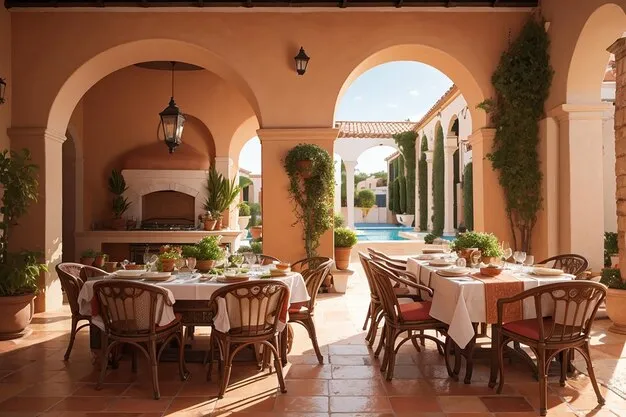
Photo: luxury resort farm-to-table breakfast artisan ceramics Mediterranean terrace, via img.freepik.com
There is a particular moment that seasoned luxury travelers describe with striking consistency. It is not the sight of a panoramic suite or the weight of a monogrammed key in the palm. It is something quieter and more visceral — the first bite of a dish prepared with ingredients sourced that very morning from a farm within walking distance of the property, or the sensation of running a hand across a linen that carries the faint irregularity of handcraft. These moments, imperceptible to the casual guest, function as a kind of authentication for the world's most discerning travelers. They signal that a resort has not simply purchased luxury — it has earned it.
Across the most coveted properties from the Aegean coast to the valleys of Northern California, a fundamental shift is underway in how affluent American travelers evaluate the establishments they choose to trust with their most precious resource: their time.
Beyond the Metrics of Opulence
For decades, the language of luxury travel was largely visual and quantitative. Square footage, thread counts, Michelin stars, and Forbes ratings provided a legible shorthand for quality. These metrics still matter, of course, but among the most sophisticated segment of the American travel market, they have become the floor rather than the ceiling.
What now elevates a property from impressive to irreplaceable is its capacity to engage the full sensory register of a guest — and to do so with material and culinary honesty. A resort that imports generic marble from a catalog and serves an internationally standardized tasting menu has technically delivered luxury. But it has delivered it without a soul, and the modern connoisseur can taste the difference.
The shift reflects a broader evolution in how America's wealthiest travelers understand authenticity. Having accumulated considerable experience across the globe's finest properties, they have developed what might be described as a sensory literacy — an ability to distinguish between the performance of luxury and its genuine expression.
The Table as Testament
Food philosophy has become perhaps the most revealing window into a resort's true character. Elite properties that have earned lasting loyalty among discerning American guests tend to share a particular culinary disposition: they treat the surrounding landscape not as inspiration but as infrastructure.
This means menus that shift not just seasonally but weekly — sometimes daily — in response to what local farmers, fishermen, and foragers have made available. It means bread baked from heritage grain varieties that a chef spent years sourcing from a single family-run mill. It means a cheese course that tells the story of a specific valley rather than a curated selection of internationally recognizable names.
For the well-traveled American guest who has dined at the finest restaurants across New York, Los Angeles, and beyond, a resort's kitchen becomes a form of credential. When the ingredients are genuine and the preparation is rooted in place, the meal communicates something that no amenity brochure can replicate: that this property is in conversation with its environment rather than simply occupying it.
Several of the Mediterranean's most celebrated coastal retreats have built their reputations almost entirely on this principle. Breakfast served with honey from hives kept on the property's own terraced hillside. Dinner built around a catch negotiated directly with a local fishing family that has supplied the kitchen for three generations. These are not marketing gestures — they are the actual substance of the experience, and sophisticated travelers recognize them as such.
The Intelligence of Materials
If the table is one axis of sensory authentication, the physical environment is the other. The most respected luxury properties understand that texture communicates quality in ways that visual grandeur alone cannot.
Consider the difference between a towel that is uniformly plush and a towel that has been woven from a specific long-staple cotton variety, laundered with spring water, and finished with a weight that is immediately, unmistakably present in the hands. The distinction is not merely aesthetic — it is philosophical. It announces a level of intentionality that begins with sourcing decisions made long before a guest ever arrives.
This sensory intelligence extends throughout the finest properties. Hand-plastered walls that retain the faint warmth of the craftsman's touch. Floors of reclaimed stone that carry the subtle topography of centuries underfoot. Furniture constructed from locally harvested timber by artisans whose workshops are within the same region as the resort itself. Each of these elements contributes to what might be called a material narrative — a coherent story told through touch about where a place comes from and what it values.
American travelers who have invested meaningfully in their homes — commissioning bespoke furniture, sourcing artisanal materials, working with architects who understand the difference between luxury and mere expense — bring this same discernment to their travel choices. They are not fooled by the visual language of opulence when the tactile reality tells a different story.
The Resort as Curator, Not Curator
What distinguishes the properties that have mastered this sensory dimension is not simply that they offer beautiful things — it is that they have developed a coherent point of view about beauty itself. The finest establishments function less like luxury hotels and more like the homes of extraordinarily cultivated hosts who have spent decades assembling a personal world from genuine conviction rather than market research.
This curatorial intelligence manifests in unexpected details. The selection of a particular local pottery for the breakfast service because its slight imperfections echo the texture of the surrounding landscape. The choice to offer a single, exceptional local wine rather than an exhaustive international cellar, because the former tells a more honest story about place. The decision to commission linens from a regional textile tradition that is slowly disappearing, not as a heritage tourism gesture but because the quality is genuinely superior.
For the American traveler who approaches luxury not as a status signal but as a genuine pursuit of excellence, these decisions are profoundly legible. They communicate that the people running this property share a common sensory language — and that the experience being offered is not a product but a perspective.
Arriving With New Senses
The practical implication for those planning their next significant journey is worth considering carefully. Before committing to a property, the most discerning travelers now ask questions that would have seemed unusual a decade ago. What is the kitchen's sourcing philosophy, and how deeply does it extend into the local food community? What materials were selected for the guest spaces, and what was the reasoning behind those selections? Is there evidence of a sustained relationship between the property and the craftspeople, farmers, and artisans of its surrounding region?
These questions are not merely due diligence — they are a form of sensory forecasting. They allow the sophisticated traveler to anticipate whether a property will engage them on the level that ultimately matters most: not the level of spectacle, but the level of genuine, embodied experience.
The most extraordinary luxury destinations in the world have always understood, in some form, that the senses are the final arbiters of quality. What has changed is that the travelers arriving at their doors have become fluent enough in that language to know, before the first meal is finished or the first morning light falls across the bedroom floor, whether they have found something real.