Roots Without Borders: How the Ultra-Wealthy Are Choosing Community Over Cachet in Their International Residences
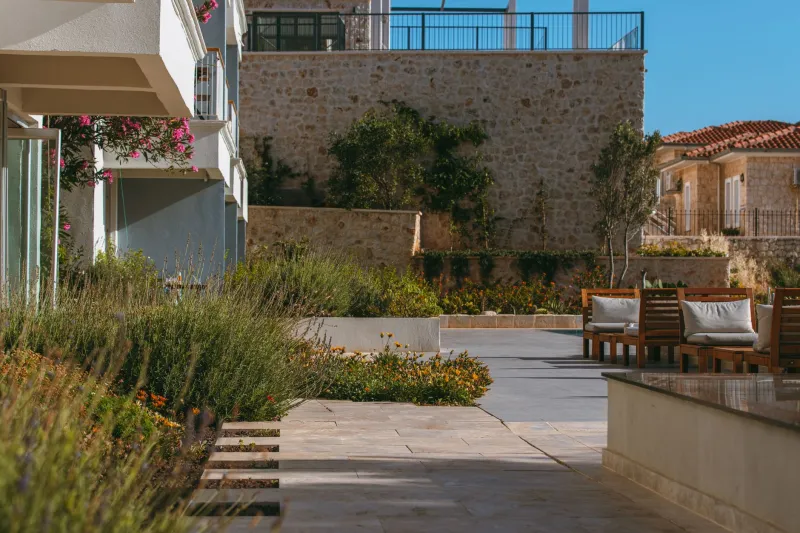
For decades, the international second home functioned as a kind of geographic trophy — a villa on the Amalfi Coast, a chalet above Gstaad, a pied-à-terre in the seventh arrondissement. The address announced something. It was a credential as much as a residence, a signal broadcast to a particular audience who knew precisely what it meant.
That logic is quietly unraveling.
Across the corridors of private wealth management, among the advisors who counsel America's most financially sophisticated families, a different conversation has taken hold. The question is no longer which address carries the most prestige. It is, rather, a more searching and personal one: Where do I actually want to live?
The Collapse of the Trophy Address
The shift is subtle but unmistakable. Ultra-high-net-worth Americans — those with the genuine latitude to place a second home anywhere on the globe — are demonstrating a growing resistance to the inherited hierarchy of luxury real estate destinations. The classic European capitals still hold appeal, but they are no longer the default answer. They must now compete against a more honest set of criteria.
Cultural resonance has emerged as perhaps the most decisive factor. Affluent buyers are increasingly asking whether a destination's daily texture — its markets, its social rhythms, its relationship to food and time and community — aligns with who they are, not merely with who they wish to be perceived as. A property in Mérida, Mexico, for a family whose intellectual life revolves around pre-Columbian history, may carry more genuine meaning than a comparable investment in Cannes. A residence in Porto for a couple whose aesthetic sensibility runs toward handcrafted permanence over polished novelty may offer something a Marbella villa simply cannot.
This is not anti-luxury sentiment. It is, in fact, a more refined expression of it.
Lifestyle Alignment as a Framework
The most discerning buyers now approach international residence decisions with something resembling a lifestyle audit. Before engaging architects or attorneys, they spend extended periods — often six weeks or longer — inhabiting a destination in the manner of a local rather than a visitor. They rent apartments in residential neighborhoods rather than suites in flagship hotels. They shop at the same markets, attend the same cultural institutions, and observe the social architecture of a place with genuine curiosity.
What they are testing is alignment. Does the pace of this community match the pace at which I wish to live? Does the local culture reward the qualities I most value — intellectual rigor, culinary seriousness, artistic engagement, physical vitality? Are there people here with whom I might build genuine friendships, not merely pleasant seasonal acquaintances?
This due diligence is reshaping the geographic distribution of elite second-home acquisition in ways that occasionally surprise even seasoned real estate professionals. Communities in the Alentejo region of Portugal, the highlands of Oaxaca, the island interiors of Greece, and the lesser-celebrated lake districts of northern Italy are receiving sustained attention from buyers who might once have gravitated reflexively toward more famous addresses.
The Community Question
Perhaps the most significant departure from earlier models of luxury real estate thinking is the weight now placed on community composition — and not in the exclusive, gated-enclave sense. Many of the most sought-after international residences are chosen specifically because they place their owners within a living community rather than apart from it.
This represents a meaningful philosophical reversal. The legacy model of the ultra-luxury second home often emphasized separation: the property as a retreat from the world, surrounded by walls, staffed by a household team, insulated from the ordinary life of the surrounding region. The emerging model treats immersion as the asset. Proximity to a vibrant local culture, to artisan communities, to multi-generational neighborhood life — these are now understood as amenities that no amount of interior design can replicate.
Several buyers interviewed by advisors in the high-net-worth residential space describe the same essential discovery: that the most satisfying international residence is one in which the owners feel, over time, that they belong to a place rather than simply owning a piece of it.
Investment Logic Recedes
It would be inaccurate to suggest that financial considerations have disappeared from the calculus entirely. Ultra-wealthy buyers remain sophisticated about asset allocation, and a second home of significant value will always carry investment implications. But the hierarchy has shifted. Where investment potential once led the conversation, it has receded to a secondary position — a criterion that must be satisfied but no longer governs the decision.
This recalibration reflects a broader maturation in how affluent Americans conceptualize the relationship between wealth and experience. The generation of buyers currently most active in the international second-home market came of age during a period of profound disruption — financial, political, and cultural. That experience appears to have concentrated the mind around questions of genuine meaning. A property that appreciates handsomely but fails to nourish its owners' lives is increasingly understood as a poor investment in the fullest sense of the term.
What Belonging Actually Costs
The pursuit of genuine belonging in an international context is not without its complexities. It demands time — not the compressed time of a luxury itinerary, but the slow, accumulative time of repeated presence. It demands language, at least at a functional level, and a willingness to engage with local institutions, governance, and social customs on their own terms. It demands, in short, a form of commitment that the traditional second-home model did not require.
For those willing to make it, however, the return is described in terms that no investment metric captures: the experience of arriving somewhere and feeling, with quiet certainty, that one has come home.
That is, ultimately, what the most discerning travelers have always been searching for — not a prestigious address, but a place that answers to something essential in themselves. The geography of belonging, it turns out, is intensely personal. And for those with the means to choose it freely, it has become the most considered luxury of all.