Putting Down Roots: Why America's Ultra-Wealthy Are Quietly Claiming Forgotten Corners of Europe as Their Own
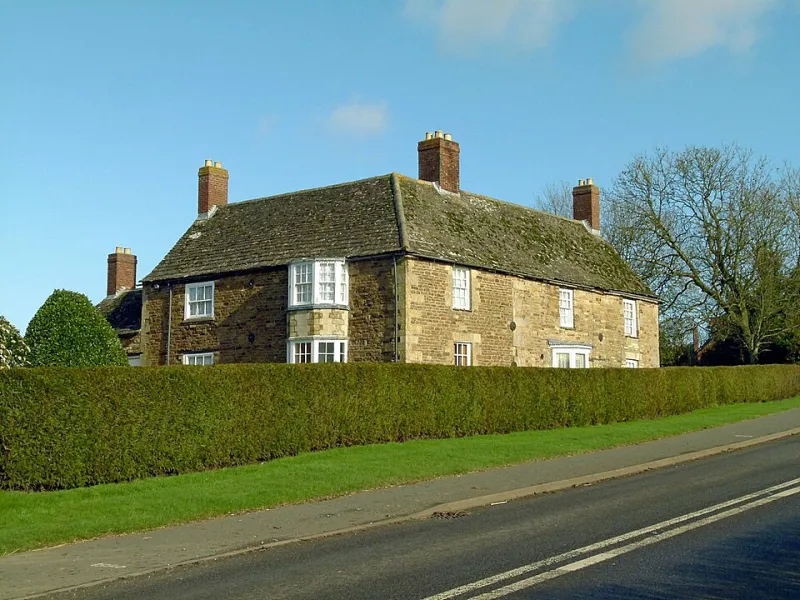
Photo: Alan Murray-Rust , CC BY-SA 2.0, via Wikimedia Commons
For much of the past two decades, the aspirational European property was a known quantity. A Tuscan farmhouse. A Provençal mas. A Côte d'Azur villa with a name and a history and a waiting list of admirers who had seen it featured in a glossy magazine. These were trophies as much as retreats—acquisitions that announced a certain fluency in the language of global taste.
That language, it appears, is being quietly revised.
America's most discerning families are increasingly turning away from the well-catalogued and the well-photographed, redirecting their attention—and their capital—toward corners of Europe that have not yet been curated for consumption. The Peloponnese. The Dordogne. Rural Andalusia. The interior of Puglia. These are not destinations that appear prominently in luxury travel supplements or command the immediate recognition of their more celebrated counterparts. That, for many buyers, is precisely the point.
The Limits of the Trophy Property
There is a particular exhaustion that sets in when a property becomes a statement rather than a sanctuary. When the address itself becomes the experience, the actual experience—the quality of the morning light, the relationship with the village below, the particular silence of a hillside at dusk—tends to recede. What remains is performance: the annual visit, the carefully composed photograph, the name dropped at the right dinner.
The families now gravitating toward lesser-known European regions are, by and large, those who have already passed through that phase. They have owned the recognizable addresses. They have visited the celebrated destinations. And they have arrived, often quietly and without fanfare, at the conclusion that what they want is not recognition but belonging.
Belonging, in this context, is a specific and demanding thing. It requires time. It requires local knowledge. It requires the willingness to invest in a place not because it reflects well on you, but because it has begun, in some genuine sense, to feel like yours.
The Peloponnese: Ancient Ground, Unhurried Pace
Few landscapes in Europe carry the weight of history as lightly as the Peloponnese. The southern Greek peninsula, home to Mycenae, Olympia, and the Byzantine ghost city of Mystras, has long attracted scholars and archaeologists. It has been slower to attract the kind of affluent American family that might otherwise gravitate toward Santorini or Mykonos—and that relative obscurity has preserved something irreplaceable.
Properties here tend toward the substantial: restored stone towers, olive groves measured in centuries rather than years, farmhouses that have witnessed the rise and fall of empires without particular alarm. American buyers are finding that the investment required is not merely financial. To truly inhabit the Peloponnese is to learn its rhythms, to develop relationships with the families who have farmed its valleys for generations, to understand which olive oil comes from which grove and why it matters.
For those willing to make that investment, the returns are not denominated in resale value. They are denominated in depth.
The Dordogne: Where France Exhales
If Provence has become, in certain circles, a victim of its own renown, the Dordogne has retained the quality that made the French countryside so compelling in the first place: the sense that ordinary life, conducted beautifully, is its own form of luxury.
The river valleys of the Périgord—with their limestone cliffs, medieval bastide towns, and markets that have been operating on the same day of the week since the thirteenth century—offer American families something that the more fashionable regions of France increasingly cannot: the experience of not being a tourist. Of being, instead, a neighbor.
This distinction matters more than it might initially appear. The families establishing multigenerational compounds in the Dordogne are not merely buying property; they are buying into a social fabric. They are learning which baker opens earliest, which winemaker will share a bottle at the end of a harvest, which path through the woods leads to a view that no guidebook has thought to mention. These are the kinds of knowledge that cannot be acquired in a week. They accumulate, slowly and pleasurably, across seasons and years and generations.
Rural Andalusia: The Spain That Tourism Forgot
Andalusia's coastal cities—Seville, Granada, Málaga—have long been celebrated, and rightly so. But the interior of the region, particularly the hill towns of the Serranía de Ronda and the remote villages of the Alpujarras, occupies a different register entirely. Here, the rhythms of agricultural life have not been significantly altered by the arrival of international visitors, and the landscape—dramatic, austere, profoundly beautiful—rewards the kind of sustained attention that a one-week itinerary cannot provide.
American families acquiring properties in rural Andalusia often speak of the same phenomenon: an initial visit that was meant to be exploratory, followed by a return that was meant to be brief, followed by the quiet recognition that they had found something they had not known they were looking for. The Spanish concept of querencia—a place from which one's strength is drawn, a place where one feels most authentically oneself—is not easily translated, but it is readily understood by those who have experienced it.
The Architecture of Generational Investment
What distinguishes these acquisitions from conventional second-home purchases is the explicit orientation toward the future. The families involved are not asking how a property will serve them next summer. They are asking how it will serve their children, and their children's children. They are thinking about the kind of place that becomes, over time, the gravitational center of a family's identity—the address that everyone knows, the landscape that everyone carries.
This temporal horizon changes the nature of the investment in practical terms as well as emotional ones. Restoration is undertaken slowly and carefully, with local craftspeople using local materials. Relationships with neighboring farmers and artisans are cultivated with genuine interest rather than transactional intent. The property is not optimized for maximum enjoyment in minimum time; it is allowed to reveal itself gradually, on its own terms.
The result, for those with the patience to pursue it, is something that the luxury market rarely delivers: a place that cannot be replicated, cannot be rented, and cannot be fully understood by anyone who has not spent years within it.
The Quiet Luxury of Obscurity
There is an irony, not lost on the families involved, in the fact that the most exclusive European retreats are now the ones that appear in no directory. The Peloponnese compound that has been in an American family for fifteen years. The Dordogne farmhouse that the grandchildren will one day argue about inheriting. The Andalusian cortijo where the olive harvest has become a family ritual.
These are not properties that announce themselves. They do not need to. Their value lies not in what they signal to the outside world but in what they provide to the people who know them well: continuity, depth, and the rare, unhurried pleasure of a place that has been genuinely earned.