Beyond the Five Senses: How Ultra-Luxury Resorts Are Replacing the Concierge with the Sensory Architect
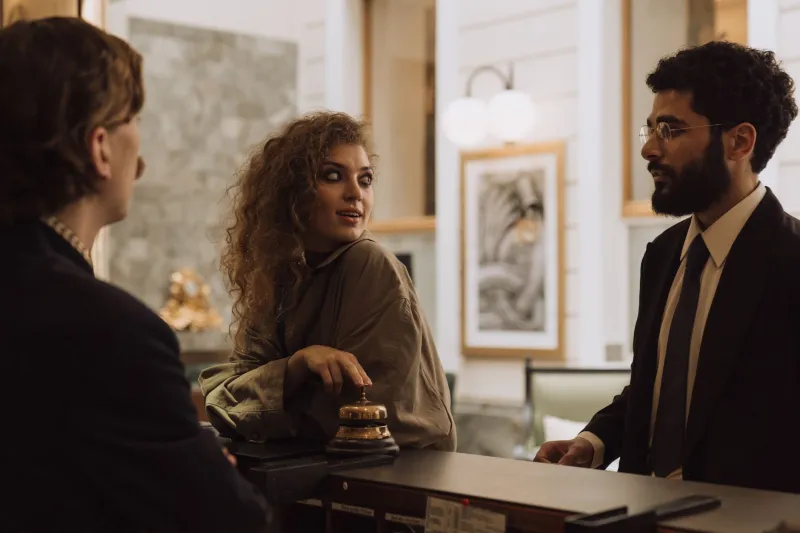
The traditional luxury hotel concierge is a figure of considerable skill. Trained in geography, gastronomy, and the art of anticipation, the finest practitioners of this profession have long been regarded as indispensable — the human infrastructure upon which a truly exceptional stay depends. Yet at a select tier of ultra-luxury properties, the role is being quietly, and rather dramatically, reimagined.
The new specialist carries a title that would have seemed improbable a decade ago: sensory curator. And the scope of their work extends well beyond securing a coveted dinner reservation or arranging a private excursion. Their mandate is the design of an entire experiential environment — one calibrated, with remarkable precision, to the neurobiological and aesthetic preferences of each individual guest.
The Limits of Logistics
To understand why this shift is occurring, it helps to consider what the traditional concierge model was never designed to address. Exceptional service, in its classical form, is fundamentally reactive. It responds to stated preferences, fulfills expressed requests, and resolves difficulties with grace. What it rarely does — what it was never structurally equipped to do — is anticipate the unstated, the felt, the sensory.
A guest may not know how to articulate that they find the particular frequency of ambient music in a hotel lobby subtly fatiguing. They may not be able to explain why one suite feels inexplicably more restorative than another of identical size and furnishing. They may not realize that the faint floral note in a corridor fragrance system is activating an associative memory that colors their entire perception of the property.
Sensory curators are trained to work at precisely this level of subtlety — and to do so before a guest has even formulated a complaint or a preference.
The Science Behind the Experience
The academic disciplines informing this emerging hospitality specialty are varied and, at first glance, perhaps unexpected. Olfactory psychology — the study of how scent activates emotion, memory, and physiological response — is among the most established. Properties at the leading edge of this movement retain specialists who design custom fragrance profiles for individual suites and common spaces, adjusting molecular composition based on guest profiles developed through pre-arrival questionnaires and, in some cases, previous stay data.
Acoustic design represents another pillar. The relationship between sound frequency, spatial geometry, and human stress response is well-documented in environmental psychology research. Some resorts now employ acoustic consultants who assess a guest's sensitivity to particular sound environments — the ratio of hard to soft surfaces in a room, the presence or absence of natural water sounds, the decibel threshold of ambient music in dining spaces — and adjust accordingly.
Chromatic psychology, the study of how color and light temperature influence mood and cognitive state, completes a core triad of disciplines. Lighting systems in the most advanced properties can shift color temperature throughout the day in alignment with a guest's circadian preferences, a protocol that is increasingly informed by data gathered from wearable wellness devices some guests choose to share with the resort in advance of arrival.
A Profile Built Before Arrival
The process by which a sensory curator develops a guest profile varies by property, but the most sophisticated operations begin their work weeks before check-in. Pre-arrival communications — framed as elegant, low-burden questionnaires rather than clinical intake forms — gather information about preferred sleep environments, sensory sensitivities, aesthetic affinities, and even formative travel memories that hold particular emotional resonance.
At certain properties in the American Southwest and along the New England coastline, this pre-arrival dialogue has become something of an art form in itself — a correspondence that guests describe as feeling less like a hotel intake process and more like a thoughtful conversation with a host who is genuinely curious about who they are.
The resulting profile informs decisions that a guest may never consciously register: the weight of the throw placed at the foot of the bed, the temperature of the stone floors in the bathroom, the specific botanical blend used to prepare the welcome amenity, the orientation of furniture relative to natural light. Each detail is chosen not according to a universal standard of excellence, but according to an individual standard of alignment.
The Professionals Filling These Roles
Who, exactly, is being hired into these positions? The talent pool is eclectic by necessity. Sensory curators at leading properties hold backgrounds in fields as diverse as clinical aromatherapy, museum curation, landscape architecture, sound healing, and culinary science. Some have graduate training in environmental psychology or neuroaesthetics — a discipline that examines the neurological basis of aesthetic experience and has gained considerable traction in design and hospitality circles over the past several years.
What unites these professionals is less a common credential than a common orientation: a belief that the physical environment of a stay is not a neutral backdrop but an active participant in a guest's experience, capable of either supporting or undermining the very restoration and pleasure the guest has traveled to find.
Hospitality programs at several American universities, including those with strong ties to the resort communities of Florida, Hawaii, and the Mountain West, have begun incorporating sensory design modules into their curricula — a signal that this specialty is moving from boutique novelty toward mainstream expectation.
Experiential Orchestration as Competitive Distinction
For the properties investing in this approach, the business case is not difficult to articulate. In a market where physical amenities — the infinity pool, the spa, the farm-to-table restaurant — have become largely standardized at the ultra-luxury tier, the capacity to offer something genuinely personalized at the sensory level represents a meaningful point of differentiation.
Guests who experience a stay that feels, in some ineffable way, precisely right — not merely comfortable, not merely beautiful, but somehow intuitively aligned with who they are — tend to return. And in the loyalty economics of luxury hospitality, repeat guests represent the most valuable segment of any property's clientele.
The sensory curator, in this sense, is not a replacement for the concierge so much as an evolution beyond the concierge's historical ceiling. Where exceptional service once meant knowing where to dine and how to secure a table, it now means knowing how a guest experiences the world — and designing an environment in which that experience is honored at every moment of the stay.
At Bellapais Deluxe, we have always held that the finest travel is not merely witnessed but felt. The rise of the sensory curator confirms what the most discerning travelers have long understood: that the greatest luxury is an experience that seems to have been designed for no one else.