The Curated Portfolio: Why America's Wealthiest Travelers Are Assembling Their Own Global Hotel Collections

There is a particular kind of traveler who has grown quietly impatient with the conventional luxury hotel experience. Not because the thread counts are insufficient or the restaurants underwhelming — but because the relationship feels fundamentally transactional. You arrive as a guest. You depart as a receipt. The hotel, however magnificent, retains its indifference.
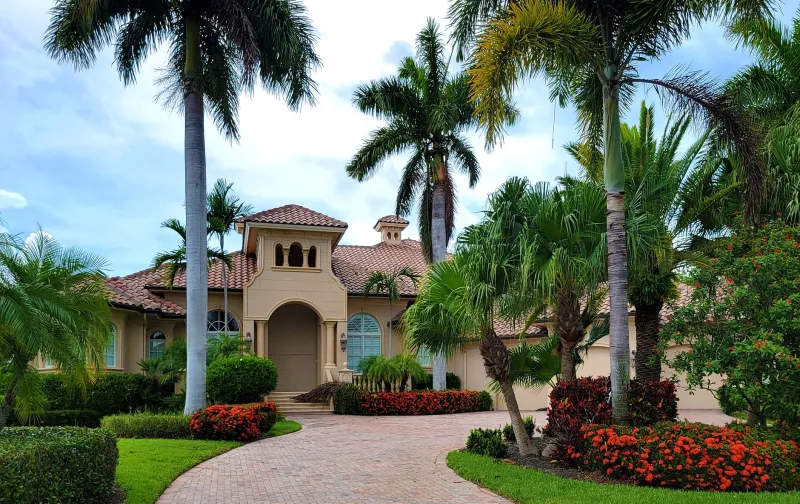
This is precisely the dissatisfaction that has given rise to one of the most compelling shifts in high-end travel: the personal hotel portfolio. Across the United States, a rising class of ultra-affluent travelers — tech founders, private equity partners, multigenerational wealth families, and senior executives — are bypassing traditional hospitality structures entirely. In their place, they are assembling bespoke collections of fractional ownerships, co-ownership stakes, and exclusive membership arrangements with carefully selected boutique properties scattered across multiple continents. The philosophy is less about booking a room and more about owning a relationship.
From Loyalty Points to Actual Ownership
For decades, the luxury travel industry rewarded its best customers with a currency of points, elite status tiers, and complimentary upgrades. It was a system designed to simulate intimacy while preserving the hotel's operational distance. The wealthiest travelers, however, have always understood the difference between being treated as a valued guest and being treated as a stakeholder.
Fractional ownership models — long established in the private aviation and superyacht sectors — have migrated with surprising elegance into boutique hospitality. Under these arrangements, a traveler acquires a defined ownership interest in a property, typically granting guaranteed access windows, a proportional share of any appreciation in property value, and, crucially, a voice in how the estate is managed and positioned. The experience of arrival at a property in which one holds equity is categorically different from checking into even the most celebrated five-star address.
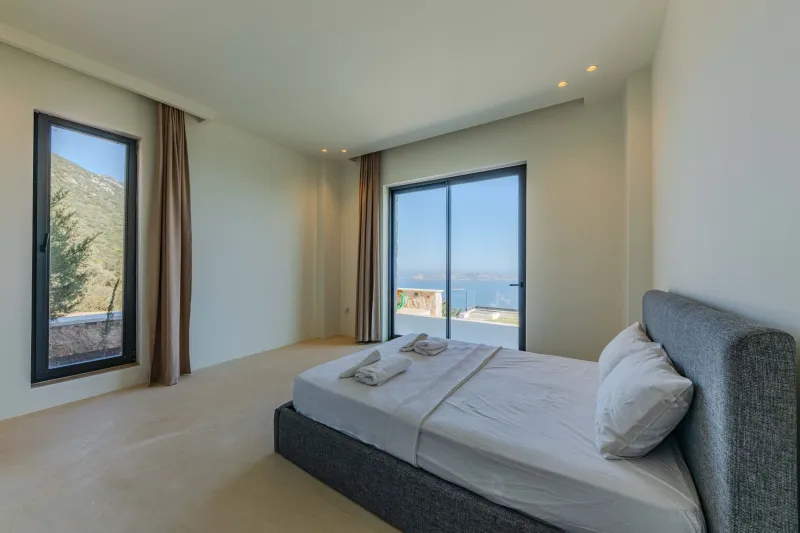
Beyond direct ownership stakes, exclusive membership networks have emerged as a compelling alternative for those who prize variety over permanence. These curated collectives — some operating quietly enough to resist easy internet discovery — grant members access to a rotating portfolio of intimate properties: a restored masseria in Puglia, a cliffside retreat in Kauai, a converted merchant's palace in Marrakech. The common thread is not geography but editorial rigor. Every property in such a network has been selected according to criteria that major hotel chains structurally cannot replicate: authenticity of place, genuine scarcity of rooms, and a staff culture oriented toward recognition rather than transaction.
The Architecture of a Personal Portfolio
Constructing a meaningful hotel portfolio requires a discipline that mirrors, in some respects, the principles of financial portfolio management. Diversification matters. A collection composed entirely of European coastal estates, however beautiful, fails to serve a traveler whose calendar also demands fluency in Southeast Asia or East Africa. The most thoughtfully assembled portfolios tend to reflect not merely a traveler's aesthetic preferences but the actual rhythm of their professional and personal life.
Geographic anchors are typically established first. A New York-based family might begin with a fractional stake in a property within a four-hour flight radius — perhaps a private villa compound in the Turks and Caicos or a mountain retreat in the Colorado Rockies that offers reciprocal arrangements with international partners. From this foundation, the portfolio expands outward, filling the coordinates of a life that moves between continents.
Seasonal logic also plays a significant role. Sophisticated collectors are increasingly attentive to the difference between owning access to a property during its premium season versus securing rights that align with the quieter intervals when the experience is richer and the crowds absent. The Bellapais philosophy — that true luxury is discovered not in the obvious moment but in the one most travelers overlook — is nowhere more applicable than here.
The Concierge of Curation
Perhaps the most significant development accompanying this trend is the emergence of specialists who function less as travel agents and more as portfolio advisors. These individuals — sometimes operating through boutique consultancies, sometimes as independent principals — possess the kind of access and institutional knowledge that no booking platform can automate.
They know which Provençal property is quietly accepting new ownership partners before any public announcement. They understand which membership network has recently added an extraordinary estate in the Japanese countryside and which has allowed its standards to drift. They maintain relationships with the founding families behind the most coveted independent properties and can negotiate arrangements that exist nowhere in any catalog.
For American clients, these advisors also navigate the legal and financial architecture of international property interests — a complexity that, if mismanaged, can transform an aspirational investment into a bureaucratic burden. The best among them treat the portfolio as a living document, revisiting its composition annually and recommending acquisitions or graceful exits as the traveler's life evolves.
What the Portfolio Delivers That Booking Cannot
The appeal of the personal hotel portfolio is ultimately not reducible to financial logic, though the economics can be compelling. At its core, this model addresses something more fundamental: the desire to be known.
When a traveler holds a genuine stake in a property — or carries a membership that signals serious, long-term commitment — the nature of every subsequent visit is transformed. Staff members recall preferences without being prompted. The proprietor may join the table for an evening drink. The room is not simply prepared; it is prepared for you specifically, with the accumulated intelligence of every prior stay informing each detail. This is the hospitality that the world's finest independent properties have always been capable of delivering, but which the conventional booking relationship never quite unlocks.
There is also the matter of discovery — a concern that might seem counterintuitive when discussing a model built on repeat access to known properties. In practice, the most curated membership networks are in a constant state of thoughtful expansion, introducing members to properties they would not have encountered through conventional research. The discovery is not accidental; it is architected by people with exceptional taste and genuine expertise.
The Future of Belonging
As the boundaries between ownership, membership, and hospitality continue to dissolve, the personal hotel portfolio is likely to become an increasingly familiar feature of how America's most affluent travelers structure their engagement with the world. The major hotel groups are watching this trend with considerable attention, and several have begun to develop hybrid models that attempt to approximate its intimacy at scale. Whether such efforts can authentically replicate what is, at its heart, a relationship model built on scarcity and genuine human connection remains an open question.
For now, the travelers assembling these portfolios occupy a rarified position: they are not merely guests in the world's finest places. They are, in a meaningful sense, part of them. And that distinction, for those who have experienced it, renders every other form of travel accommodation feel like something considerably less.