The Eloquence of Absence: Why the Most Sophisticated Resorts Have Mastered the Art of Knowing When to Disappear
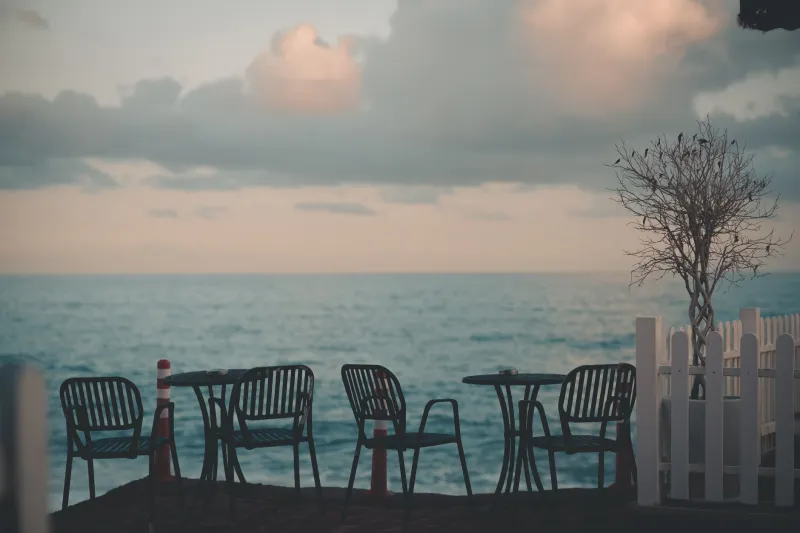
There is a particular kind of peace that no butler can deliver, no sommelier can pour, and no concierge can arrange. It is the peace of being genuinely, completely undisturbed—of stepping onto a terrace overlooking the Aegean or sinking into a chair beside a private infinity pool and feeling, with absolute certainty, that no one will approach. No one will ask. No one will interrupt.
For decades, the luxury hospitality industry measured its excellence in the velocity and attentiveness of its service. The faster the response, the warmer the greeting, the more proactive the engagement, the higher the rating. But a quiet revolution is reshaping that calculus. Among the world's most sophisticated travelers—and particularly among affluent Americans who spend their professional lives managing relentless demands on their attention—the most coveted amenity is no longer a thing at all. It is the considered, deliberate, almost architectural act of not being there.
The Psychology Behind the Desire for Uninterrupted Space
To understand why discretionary silence has become a premium offering, one must first understand the lives of the guests who prize it most. Senior executives, founders, and high-net-worth professionals in the United States operate within environments of perpetual accessibility. Notifications, obligations, and social expectations colonize nearly every waking hour. A vacation, in this context, is not simply a change of scenery—it is an act of deliberate psychological recovery.
Research in cognitive restoration theory, long studied by environmental psychologists, suggests that the human mind requires sustained periods of low-demand engagement to replenish the attentional resources depleted by high-pressure decision-making. What this means, translated into the language of hospitality, is that a guest who has just closed a nine-figure transaction or navigated a grueling board quarter does not want to be asked whether they would prefer still or sparkling water every forty minutes. They want to be trusted to ask when they are ready.
The most perceptive resort operators have internalized this understanding. They have begun to speak openly about what one Mediterranean property director recently described as "the burden of being served"—the low-grade social obligation that attentive hospitality can inadvertently create, compelling guests to perform gratitude, acknowledge presence, and manage the emotional labor of a transaction even when all they seek is stillness.
Reading the Room—and the Silence Within It
The operational challenge, of course, is considerable. Training a hospitality team to be present and responsive is difficult. Training them to be present, responsive, and simultaneously invisible requires an entirely different discipline—one that begins with the sophisticated reading of behavioral cues.
At the properties leading this movement, staff training now encompasses what might be described as a grammar of guest posture. The angle of a reclined chair. The placement of a book, open or closed, face-down or marked. The way a guest's shoulders settle when they have achieved the particular quality of relaxation that signals genuine disengagement from their surroundings. These are not arbitrary observations. They are the vocabulary of a new service language—one in which the most meaningful sentence a staff member can deliver is silence.
Some resorts have formalized this through what they call "do not disturb ecosystems"—systems that extend far beyond the conventional door placard. Guests at certain ultra-private properties in the Caribbean and Southeast Asia can now signal their preference for undisturbed time through discreet terrace indicators, app-based status settings, or simply through the pre-arrival preferences captured during an increasingly detailed onboarding conversation. The intelligence gathered before a guest ever arrives now includes not merely dietary restrictions and pillow preferences, but a nuanced profile of their solitude habits—whether they prefer silence in the mornings or evenings, whether they wish to be greeted by name or acknowledged only with a nod, whether they find ambient check-ins reassuring or intrusive.
The Operational Architecture of Restraint
Building a resort that excels at non-intervention requires, paradoxically, an enormous amount of infrastructure and intention. The restraint must be active, not passive. Staff who simply fail to appear are not delivering discretion—they are delivering neglect. The distinction matters enormously.
True anticipatory silence is the product of what hospitality designers increasingly call "invisible readiness"—a state in which every element of service is prepared, positioned, and available, yet entirely out of sensory reach until summoned. The champagne is chilled. The towels are fresh. The afternoon arrangement has been set. But none of it announces itself. None of it requires acknowledgment. The guest moves through their day in an environment that has been quietly, expertly tended without ever once demanding their attention in return.
Achieving this requires staffing models that are counterintuitive by traditional standards. Rather than maximizing guest touchpoints—the metric by which many properties have historically measured service quality—the most sophisticated operations are now designing what might be called "negative touchpoint architecture." The goal is not fewer staff, but differently deployed staff: teams trained to maintain peripheral awareness rather than central presence, to monitor without hovering, and to respond with immediacy the moment a guest signals readiness for engagement.
Why American Travelers Are Driving This Shift
While the appetite for restorative solitude exists across all cultures, American guests have emerged as particularly vocal advocates for this model of hospitality. Several factors converge to explain the trend.
The United States has, over the past decade, developed a cultural reckoning with the costs of constant connectivity. Conversations about screen fatigue, attention depletion, and the mental health consequences of always-on professional culture have moved from academic journals into mainstream discourse. High-achieving Americans are not simply tired—they are, in many cases, acutely aware of their own exhaustion and actively seeking environments designed to counteract it.
There is also a dimension of status recalibration at work. For a generation of affluent travelers who have experienced virtually every conventional luxury—the butler service, the private jet transfer, the bespoke itinerary—genuine solitude has acquired a scarcity value that few other offerings can match. To be left alone, truly and gracefully, by a property that could instead be performing its attentiveness at full volume, reads as the ultimate expression of respect. It signals that the resort understands not merely what a guest wants, but who they are.
The New Measure of Excellence
The most telling indicator of this shift may be found not in the amenities lists of the world's leading resorts, but in their guest feedback. Increasingly, the reviews that circulate among the networks and private travel forums frequented by ultra-high-net-worth Americans do not celebrate the extraordinary meal or the flawlessly executed excursion. They celebrate the afternoon when nothing happened—when the sun moved across the water, the hours passed without obligation, and the only interruption was the one the guest chose to make themselves.
In an industry that has long equated excellence with abundance, this is a genuinely radical proposition: that the most valuable thing a luxury property can offer is the gift of its own absence. The resorts that have grasped this truth are not offering less. They are offering something far more difficult to engineer and far more rare to find—a space in which their guests are free, at last, to simply be.
For the discerning traveler who has everything, the experience of being magnificently, thoughtfully, expertly left alone may be the most generous gesture the world of luxury hospitality has yet devised.