The Premium of Unreachability: How Elite Resorts Are Selling Silence as the New Ultimate Luxury
There is a particular irony embedded in the current moment of luxury travel. At a time when connectivity has never been more pervasive — when satellite systems promise broadband speeds at thirty-five thousand feet and resort properties compete on the strength of their fiber-optic infrastructure — the most coveted rooms at the world's finest establishments are the ones with no signal at all.
This is not an accident of geography. It is, increasingly, a deliberate architectural and commercial decision. Elite resorts are carving out intentional connectivity dead zones, designating specific wings, villas, and private retreats as digitally sovereign territory. And they are charging significantly more for the privilege.
The question worth asking is not simply why this is happening, but what it reveals about the psychology of affluence in contemporary America — and how the concept of luxury itself is being fundamentally rewritten.
When Absence Becomes the Amenity
For decades, the hospitality industry's relationship with technology followed a single, unbroken trajectory: more is more. High-speed internet access evolved from a differentiating feature into a baseline expectation, and properties that lagged in connectivity were penalized swiftly in reviews and occupancy rates alike.
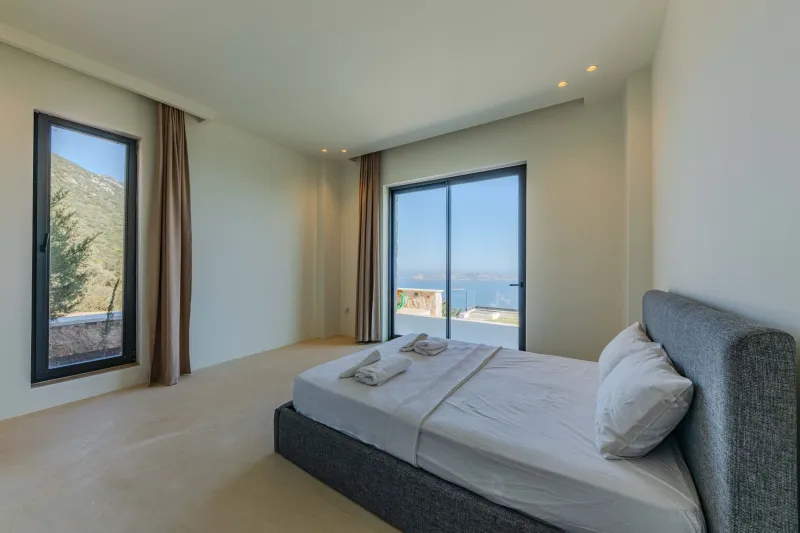
The reversal now underway is therefore remarkable in its boldness. Select ultra-luxury properties — from the remote ranch retreats of Montana to private island estates in the Caribbean — have begun introducing what the industry is quietly calling "analog accommodations." These are rooms, suites, and standalone villas deliberately stripped of WiFi routers, cellular boosters, and in some cases, even television screens. The design philosophy extends to the physical environment: no charging stations on the nightstand, no blinking router lights in the corner, no ambient hum of networked devices.
In their place: extraordinary silence. And for this silence, properties are commanding rate premiums ranging from fifteen to forty percent above comparable connected accommodations.
The Psychology of Paying to Disappear
To understand why a successful American executive or entrepreneur would willingly pay more to receive less, one must first understand what connectivity has come to represent at the highest levels of professional life.
For those who have reached genuine financial independence, the smartphone is no longer primarily a tool of convenience. It is a leash. It is the mechanism through which the world makes its demands — through which boards, partners, family members, and markets assert their claim on one's attention at any hour of the day or night. To be perpetually reachable is, paradoxically, to be perpetually subordinate.
Disconnection, then, is not deprivation. It is liberation. And liberation, in a world where most people cannot afford to be unreachable even for a weekend, is the rarest luxury of all.
Research in behavioral psychology supports this intuition. Studies consistently demonstrate that the mere presence of a smartphone — even when it is face-down and silenced — measurably reduces cognitive capacity. The anticipation of a notification, the unresolved awareness that messages are accumulating, consumes a portion of our mental bandwidth regardless of whether we actively engage with the device. True rest, the kind that restores rather than merely pauses, requires the complete removal of that anticipatory tension.
Elite resorts have absorbed this research and translated it into policy. The result is an accommodation category designed not around what it offers, but around what it withholds.
The Emerging Class Divide of Disconnection
There is a sociological dimension to this trend that deserves honest examination. The ability to be unreachable has always been, to some degree, a function of wealth and professional autonomy. A middle-manager cannot instruct her team that she will be unavailable for seventy-two hours. A small-business owner cannot simply vanish from his inbox without consequence. The freedom to disappear requires either sufficient seniority to delegate entirely, sufficient wealth to absorb any professional cost, or both.
What the analog accommodation trend has done is formalize this divide — and, in doing so, transform it into a visible luxury signal. When a guest books the WiFi-free villa rather than the connected suite, they are communicating something precise: that they occupy a position in the world where their absence requires no apology and their unreachability carries no professional penalty.
This is, of course, the same fundamental logic that has always animated luxury consumption. The wealthy have always used their spending to signal the freedoms their wealth affords. What is new is that the signal now operates in the negative — that it is defined by what one has chosen to remove rather than what one has acquired.
How Properties Are Engineering the Offline Experience
The most sophisticated practitioners of this trend understand that removing WiFi is merely the beginning. A room without internet access is not, by itself, a luxury offering. It is simply an inconvenience — unless the property has invested equally in filling the space that connectivity once occupied.
The finest analog accommodations approach this challenge with the same intentionality that a great hotel brings to its physical design. Curated libraries replace streaming services. Handwritten correspondence materials — genuine stationery, quality pens, wax seals — sit on writing desks designed to invite their use. Telescopes are positioned on private terraces. Leather-bound journals are placed on nightstands where charging pads once resided.
The programming that surrounds these spaces is equally considered. Properties offering analog accommodations tend to pair them with immersive, sensory-rich experiences: guided foraging excursions, private cooking sessions, dawn meditation rituals, stargazing programs led by resident astronomers. The logic is intuitive — if the goal is to redirect attention from the virtual to the physical, the physical must be made genuinely compelling.
Some properties have gone further still, developing what might be called "re-entry protocols" for guests departing from analog stays. Dedicated concierge support helps guests triage accumulated messages, prioritize responses, and ease back into connectivity without the jarring shock of an unmanaged inbox. The transition itself becomes a service.
The Question of Authenticity
It would be easy to regard this trend with a degree of skepticism — to see in it merely another mechanism for extracting premium pricing from guests who have already demonstrated a willingness to pay for exceptional experiences. That skepticism is not entirely without merit.
And yet the evidence suggests that guests who select analog accommodations report some of the highest satisfaction scores in the industry. The premium is being paid, and it is being validated. Something genuine is being exchanged: not merely the absence of WiFi, but the presence of a particular quality of experience that has become genuinely scarce.
In a world saturated with connection, genuine solitude has acquired the properties of a finite resource. The finest resorts have recognized this, and they are managing that resource with the same care they bring to their most exclusive suites.
For the discerning traveler, the calculation is ultimately straightforward. The question is not whether one can afford to pay more for a room without WiFi. It is whether one can afford not to.