Engineered for Recovery: The New Wave of Resorts Treating Rest as a Medical Imperative
The word wellness has been so thoroughly colonized by the hospitality industry that it has nearly lost its meaning. It appears on menus alongside adaptogen lattes and on spa brochures beside photographs of smooth stones. It has come to signify, in the context of luxury travel, a pleasant adjacency to health — the suggestion that one might emerge from a stay feeling somewhat better than when one arrived.
A small but rapidly growing cohort of elite resorts has abandoned this vocabulary entirely. They are not selling wellness. They are designing recovery — with the same rigor, the same evidence base, and increasingly, the same personnel that one would expect to find in a serious clinical setting.
The Overstimulated Guest
To understand what these properties are responding to, it helps to understand the condition they are treating. The affluent American executive who arrives at a luxury resort in 2024 is not simply tired. She is, in the clinical sense, dysregulated — operating under a chronic load of cortisol and inflammatory stress markers that conventional vacation cannot address. The weekend at a five-star property, however beautiful, is not physiologically sufficient to reverse what months or years of high-intensity professional life have accumulated in the body.
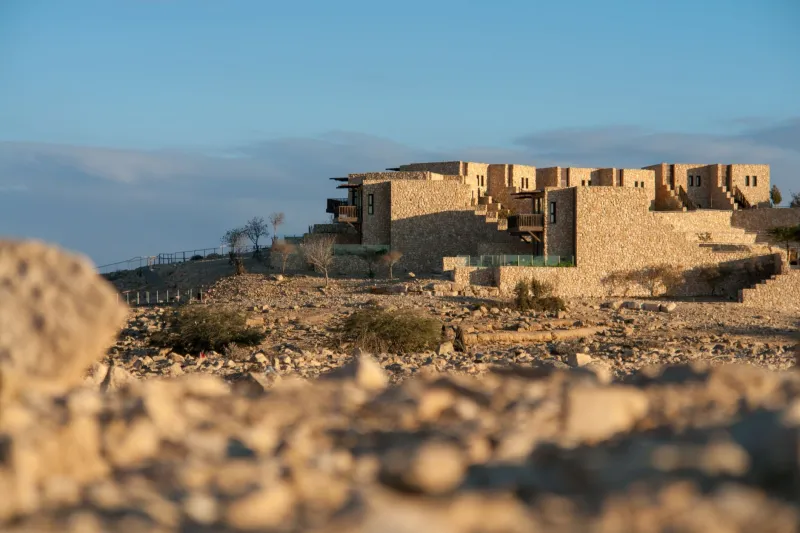
"The guests we see are not people who need a massage," says the medical director of a private wellness retreat in the high desert of New Mexico that operates under the supervision of a board-certified psychiatrist and a team of integrative medicine specialists. "They are people whose nervous systems have been running in emergency mode for so long that they have forgotten what baseline feels like. Our job is to help them find it."
This framing — the nervous system as the primary patient — is central to the design philosophy of a new generation of resorts that are distinguishing themselves through the sophistication of their environmental engineering.
The Architecture of Calm
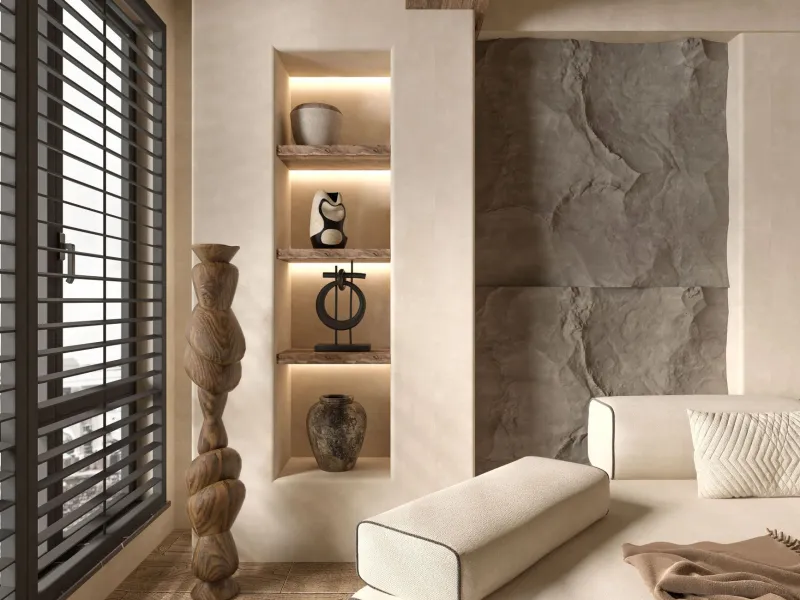
The most visible expression of this philosophy is in the physical design of the spaces themselves. These are properties where nothing is accidental and nothing is merely decorative. Every material, every light source, every acoustic surface has been selected with a specific physiological outcome in mind.
Circadian lighting systems — which modulate color temperature and intensity throughout the day to reinforce the body's natural hormonal rhythms — have become a baseline feature at properties operating in this space. Guests are exposed to high-intensity blue-spectrum light in the morning to suppress residual melatonin and sharpen alertness, transitioning through the day toward warmer, lower-intensity illumination that prepares the body for genuine sleep rather than the shallow, fragmented rest that most high-performers have normalized.
Acoustic design receives comparable attention. Several properties have commissioned custom acoustic studies of their guest spaces, identifying and eliminating the low-frequency mechanical noise — from HVAC systems, electrical infrastructure, and distant traffic — that the conscious mind ignores but the nervous system registers as a persistent, low-grade threat signal. In its place, some properties introduce precisely calibrated natural soundscapes: water at specific flow rates, wind through particular species of foliage, birdsong at volumes and frequencies associated with safety rather than alarm.
"We think about sound the way an anesthesiologist thinks about dosage," explains the lead designer of a coastal resort in Costa Rica that has invested heavily in acoustic architecture. "Too little, and the silence itself becomes a source of anxiety for guests who have never experienced it. Too much, and you are simply masking the problem. The calibration is everything."
Reducing Social Friction
Less immediately visible, but equally deliberate, is the attention these properties pay to what researchers call social friction — the low-level cognitive and emotional labor of navigating interactions with strangers, making decisions, and managing the performance of self that social environments typically demand.
At several of the properties operating in this space, the default mode is one of structured solitude. Meals may be delivered rather than served in communal dining rooms. Staff interactions are minimized in frequency and optimized in quality — brief, warm, and entirely free of the performative enthusiasm that characterizes conventional luxury hospitality. Guests are not asked how they are enjoying their stay. They are simply, and expertly, left alone.
Decision fatigue — the cumulative cognitive cost of making choices — is addressed through what one property director calls "the elimination of the trivial menu." Guests are presented with fewer options, not more. The morning schedule is suggested rather than solicited. The daily rhythm is gently structured to remove the burden of self-organization from people who spend their professional lives making consequential decisions at high speed.
"Luxury used to mean abundance of choice," observes a consultant who advises several properties in this emerging category. "The new model recognizes that for a certain kind of guest, choice is itself a stressor. The most generous thing you can do for someone like that is to think for them, elegantly, for a week."
The Medical Dimension
What separates the most sophisticated properties in this category from their wellness-adjacent peers is the integration of genuine clinical expertise into the guest experience. Several now employ full-time physicians — not as emergency resources, but as architects of individualized recovery protocols developed prior to arrival.
Guests at these properties may undergo advanced biomarker testing before their stay: cortisol curves, inflammatory panels, sleep architecture analysis, and in some cases genomic assessments that inform nutritional and supplementation protocols. The resulting data shapes everything from the macronutrient composition of their meals to the timing of their physical activities to the specific therapeutic modalities recommended during their stay.
This is not, strictly speaking, medicine. But it is closer to medicine than anything that has previously been offered under the banner of luxury hospitality — and the guests who seek it out are, by and large, sophisticated enough to appreciate the distinction.
A New Definition of Indulgence
There is something quietly radical about the proposition these resorts are making. In a culture that has long conflated luxury with stimulation — with spectacle, abundance, and the constant production of memorable experience — they are arguing for precisely the opposite: that the most indulgent thing one can offer a person of means is the systematic removal of everything that is harming them.
No performance. No itinerary. No curated moment designed to produce a photograph. Simply the unhurried, scientifically grounded, deeply considered work of helping a human being return to themselves.
For the guests who find their way to these properties — and who leave, after ten days or two weeks, sleeping through the night for the first time in years — the word luxury will never carry quite the same meaning again.