The Journey Is the Destination: How Discerning Travelers Are Turning Transit Into a Luxury Ritual
For decades, the aviation industry sold speed as the ultimate luxury. Supersonic ambitions, nonstop routes, and ever-tightening connection windows defined what it meant to travel well. Yet something quietly remarkable is happening among America's most affluent travelers: they are slowing down—deliberately, strategically, and with extraordinary taste.
The direct flight, once the gold standard of premium travel, is increasingly viewed as a missed opportunity. In its place, a philosophy of intentional transit has emerged, one in which the hours and days between departure and arrival are treated not as inconvenient voids but as the opening movements of an immersive experience. Call it the slow arrival—and it is reshaping the luxury travel market in profound ways.
The Architecture of the Curated Stopover
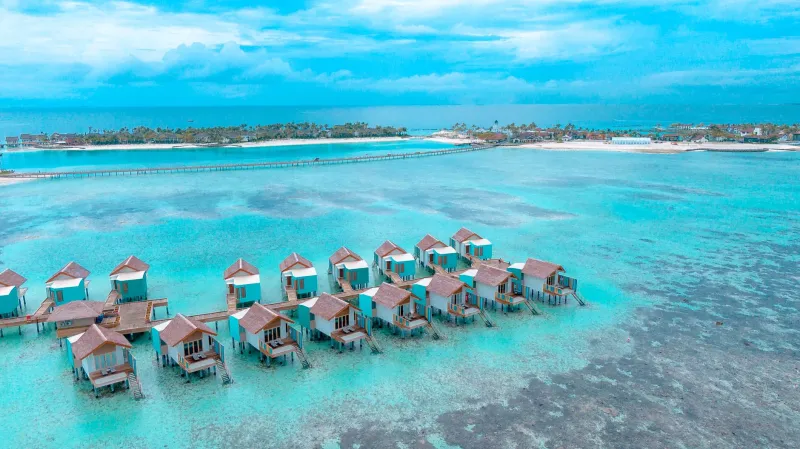
At its most considered, the slow arrival is less a travel itinerary than a composed narrative. A traveler departing New York for the Maldives might pause in London for two nights at a discreet Mayfair townhouse hotel, then continue through Dubai—not to pass through its gleaming terminal, but to spend an evening at a private desert camp on the outskirts of the city before a morning departure. By the time the final destination is reached, the journey itself has accumulated its own weight and meaning.
Luxury travel advisors who serve ultra-high-net-worth clients report that this approach is no longer a niche preference but an accelerating trend. "Our clients are no longer asking us to minimize travel time," notes one New York-based advisor whose firm manages travel for a discreet roster of executives and family offices. "They're asking us to maximize what happens within it. The journey needs to feel as intentional as the resort stay."
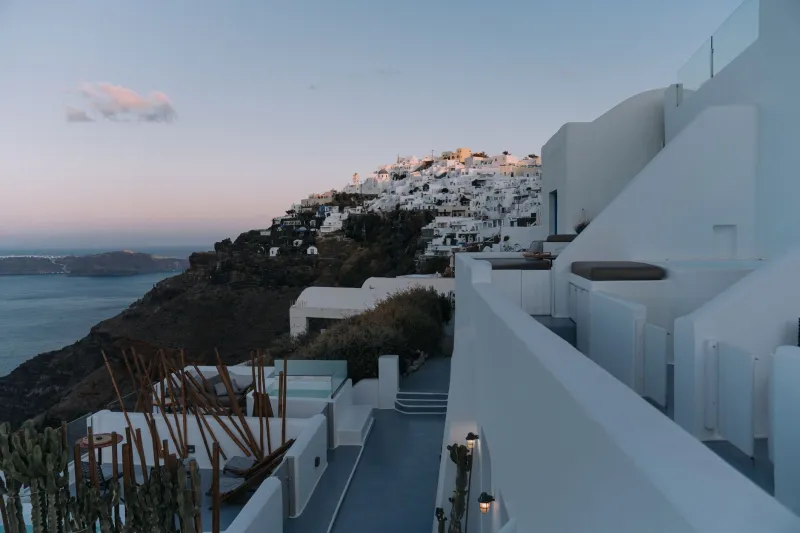
This shift has not gone unnoticed by the hospitality industry. Boutique hotel groups in traditional transit cities—Singapore, Tokyo, Istanbul, Reykjavík—are actively repositioning themselves as deliberate stopovers rather than incidental resting points. Properties in these cities now offer what might be described as compressed luxury: tightly curated programming designed for guests who may stay only thirty-six or forty-eight hours but expect every element of their brief visit to feel considered and complete.
Private Aviation and the Reinvention of the Lounge
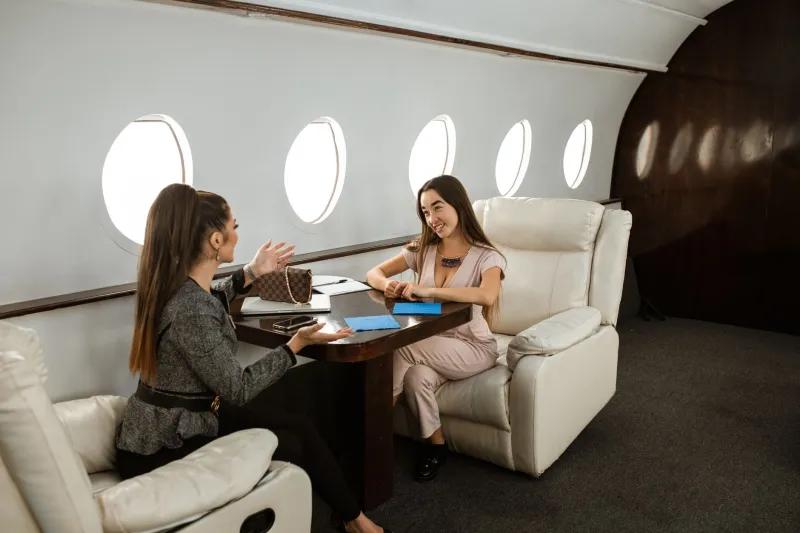
Perhaps nowhere is the philosophy of slow arrival more vividly expressed than in the world of private aviation. While fractional ownership and charter flights have long been associated with efficiency, a new generation of operators is reframing the pre-flight and in-flight experience as an extension of the broader journey rather than a functional preamble to it.
Several fixed-base operators—the private terminals that serve charter and private jet passengers—have undergone dramatic reinventions. In cities including Miami, Los Angeles, and Dallas, these facilities now offer spa treatments, curated wine libraries, chef-prepared dining, and dedicated concierge programming that can occupy a traveler for several hours before departure. The intention is explicit: the journey begins not at 30,000 feet but at the moment one steps away from the rhythms of ordinary life.
In-flight, operators catering to the ultra-luxury segment have introduced cabin experiences that borrow heavily from boutique hotel culture—hand-selected amenity kits assembled by independent perfumers, bedding sourced from Italian linen houses, and menus developed in collaboration with Michelin-recognized chefs. The aircraft cabin, in this context, becomes a temporary sanctuary with its own distinct character.
Why the Wealthy Are Choosing Friction
There is a certain paradox embedded in the slow arrival. Travel, after all, has historically been optimized to reduce friction—to move people from one place to another with minimum disruption. The deliberate introduction of additional stops, extended layovers, and overland transfers represents a voluntary embrace of what was once considered inconvenience.
The explanation, according to those who study the behavior of high-net-worth consumers, lies in a broader cultural recalibration around time. For a demographic accustomed to having nearly every logistical demand met instantly, the act of slowing down has become its own form of luxury. Time, spent with intention and surrounded by beauty, is now among the rarest and most coveted commodities.
There is also a social dimension worth noting. In a culture where travel has become highly visible—shared across private social networks and discussed within peer communities—the ability to describe a journey with narrative richness carries its own prestige. Arriving in the Maldives is one thing. Arriving in the Maldives by way of a hand-restored riad in Marrakech and a private sunset sailing excursion off the Amalfi Coast is something else entirely.
Designing the Slow Arrival: What to Consider
For travelers considering this approach for the first time, the temptation is to treat each stopover as a miniature vacation—a checklist of attractions compressed into forty-eight hours. Experienced slow-arrival travelers counsel restraint. The most successful stopovers are defined by depth rather than breadth: a single extraordinary dinner, an unhurried morning in an exceptional museum, an afternoon at a thermal bath with no agenda beyond stillness.
The role of the luxury travel advisor is particularly important in this context. Orchestrating a multi-stop journey that retains coherence and avoids fatigue requires both deep destination knowledge and an understanding of the traveler's particular sensibility. The best advisors approach the slow arrival as a form of curation—selecting each element for how it contributes to the overall emotional arc of the journey.
Logistical considerations are equally significant. Visa requirements, baggage handling across multiple carriers, and the coordination of ground transportation between airports and city-center properties demand careful advance planning. For those traveling with families or in small groups, the complexity multiplies—though so, many would argue, does the reward.
A New Standard for the Journey Itself
The slow arrival signals something meaningful about where luxury travel is heading. As the experiences available at top-tier resorts and private retreats become increasingly extraordinary, the bar for what surrounds them rises accordingly. Travelers who have grown accustomed to perfection at their destination are beginning to demand the same standard from every hour that precedes it.
The world's finest hospitality brands appear to be listening. New partnerships between private aviation operators, boutique urban hotels, and destination resorts are quietly redefining the architecture of the premium journey—ensuring that the experience of arrival is as carefully composed as the experience of staying.
For those who have always understood travel as an art form, the slow arrival is simply the natural conclusion of that philosophy: that movement through the world, undertaken with intention and surrounded by beauty, is not a means to an end. It is the thing itself.