The Unscripted Itinerary: How the World's Most Discerning Travelers Are Choosing Raw Reality Over Polished Perfection
There is a particular kind of exhaustion that arrives after one too many perfectly choreographed resort experiences. The welcome cocktail presented on a silver tray, the orchid placed at precisely the right angle on the turned-down bed, the sunset dinner staged with the mathematical precision of a Broadway production. For a generation of affluent American travelers who have stayed in the finest properties on every continent, flawlessness has begun to feel, paradoxically, hollow.
What they are seeking instead is something far more elusive—and, as it turns out, far more expensive to deliver.
The Paradox at the Heart of Modern Luxury
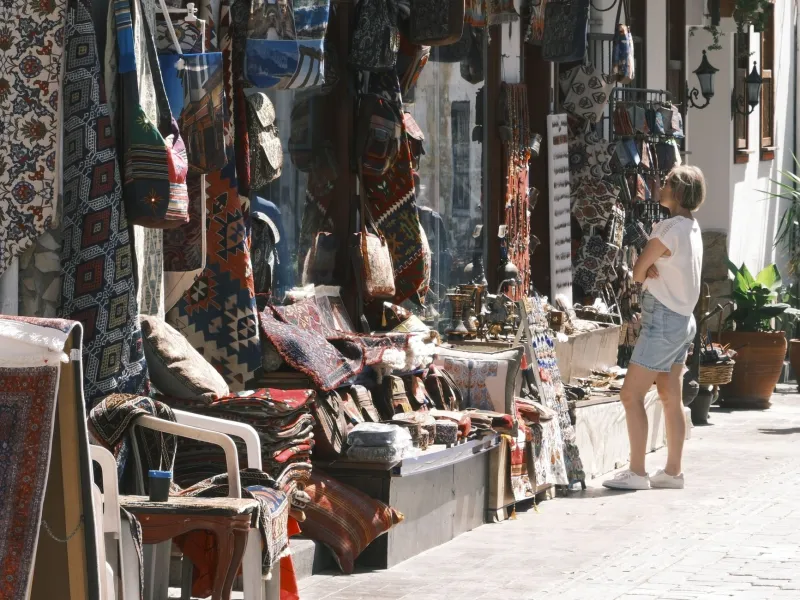
The shift is well documented among travel advisors who serve ultra-high-net-worth clients. Requests that once centered on suite upgrades and private beach access have quietly evolved. Today's most sophisticated travelers are asking different questions: Can we eat where the fishermen eat? Is there a ceramicist in the village who would let us watch her work? Can someone arrange for us to attend a neighborhood market before it opens to tourists?
This is what industry observers have begun calling the authenticity premium—the measurable willingness among affluent travelers to spend considerably more for experiences that feel unrehearsed, locally embedded, and genuinely spontaneous. According to luxury travel consultants working with American clientele, this premium can add anywhere from fifteen to forty percent to the cost of a bespoke itinerary, and demand is accelerating.
The irony, of course, is profound. These are travelers who have the resources to insulate themselves entirely from the inconveniences of the unpolished world. They choose not to. They are, in effect, purchasing access to ordinariness—but ordinariness of a very particular, carefully sourced variety.
What Authenticity Actually Costs
Understanding the economics of this trend requires separating the concept of authenticity from mere rusticity. The affluent traveler seeking a genuine local encounter is not interested in discomfort for its own sake. They are not trading their private villa for a youth hostel. Rather, they are asking that the five-star infrastructure they expect—the attentive service, the seamless logistics, the absolute assurance of safety and quality—be rendered invisible, so that what remains visible feels entirely real.
This is an extraordinarily difficult thing to deliver. It requires relationships built over years with local communities, a deep understanding of which experiences can absorb outside visitors without becoming performative, and the logistical sophistication to move guests through these encounters without a single seam showing.
The most forward-thinking luxury properties in destinations from Oaxaca to the Peloponnese have quietly invested in exactly this infrastructure. They employ what might be called cultural liaisons—individuals who are genuinely of the community, not merely knowledgeable about it—whose role is to facilitate introductions that feel organic rather than arranged. A chef who invites a small group of guests to accompany her to the morning market is not improvising; she has been cultivating that relationship with the market vendors for years. The spontaneity is real. The framework that makes it possible is not.
The American Traveler's Particular Hunger
Among the various nationalities driving this trend, American luxury travelers occupy a distinctive position. Many come from a domestic travel culture where even high-end tourism can feel relentlessly packaged—theme park logic applied to destinations that deserve something more contemplative. When they arrive in Kyoto, Marrakech, or the Dalmatian coast, they arrive with a specific, almost urgent desire to encounter something that has not been designed for their consumption.
There is also a generational dimension worth noting. Affluent millennials and older members of Generation X, now in their peak earning years, came of age with a cultural skepticism toward the manufactured. They watched the rise of authenticity as a marketing language and became, as a result, exquisitely sensitive to its counterfeit forms. They can detect a curated "local experience" with the same precision they would apply to identifying a fraudulent wine vintage. The properties that earn their loyalty are those that have done the deeper work.
Engineered Spontaneity: The New Art of the Luxury Operator
The finest operators in this space have developed what might be described as a philosophy of structured improvisation. The guest is never aware of the scaffolding. What they experience is a series of encounters that feel discovered rather than delivered—a conversation with an elderly winemaker that leads, naturally, to an invitation to taste from barrels that never appear on any menu; a wrong turn on a village walk that opens onto a courtyard where a family is preparing a feast for a local celebration.
None of this happens by accident. The winemaker has been a trusted partner of the property for a decade. The village walk has been designed with what operators call productive wandering in mind—routes that feel exploratory but pass through nodes of genuine cultural activity at predictable times. The feast in the courtyard is real, the family is real, and the invitation extended to guests is genuinely warm. But the conditions that made the encounter possible were arranged with considerable care.
This is not deception. It is, rather, a form of hospitality that respects both the guest's desire for genuine experience and the community's need to engage with visitors on its own terms. The best operators are explicit about this philosophy when speaking with clients: we do not manufacture authenticity, but we create the conditions in which it can occur.
The Properties Setting the Standard
Across the Mediterranean, Latin America, and Southeast Asia—regions where American luxury travelers are increasingly directing their attention—a new tier of boutique property has emerged to meet this demand. These are not necessarily the largest or most visually spectacular resorts. They are distinguished instead by their depth of community integration, their refusal to replicate the same curated itinerary for every guest, and their genuine investment in the cultural ecosystems that surround them.
Some have established formal residency programs for local artists and craftspeople, creating natural opportunities for guest encounters. Others have partnered with regional culinary institutions to develop dining experiences that draw on genuinely local knowledge rather than international fine-dining conventions. A few have gone further still, structuring their philanthropic commitments in ways that give guests meaningful—if brief—participation in community life.
A New Definition of Return on Investment
For the discerning American traveler, the measure of a journey has shifted. The question is no longer whether the suite was the finest available or the spa menu sufficiently comprehensive. The question is whether the trip produced something that cannot be replicated—a story that is genuinely theirs, an encounter that belonged to no itinerary, a moment of real human connection in a world increasingly skilled at simulating it.
That, ultimately, is what the authenticity premium is purchasing. Not roughness or inconvenience, but the irreducible sensation of having been somewhere real. In a landscape of nearly infinite luxury options, reality has become the rarest amenity of all.