Sleeping Inside History: The Ultra-Luxury Properties Where the Past Is the Most Valuable Amenity
There is a moment, familiar to anyone who has stood in a room where history happened, when the present tense becomes unstable. The light falls at an angle that has not changed in four centuries. The stone beneath your feet has absorbed the footsteps of people whose names appear in the books you studied as a child. The silence in the corridor carries a different quality than ordinary silence — it is dense with what has already occurred, layered in a way that no amount of interior design can manufacture.
This moment — call it temporal vertigo, or the shock of proximity to accumulated meaning — is increasingly what the world's most discerning travelers are traveling to find. And the properties that can reliably deliver it have become, in the quiet arithmetic of the ultra-luxury market, among the most coveted addresses on earth.
The Asset That Cannot Be Built
The contemporary luxury hospitality industry is extraordinarily good at building things. It can engineer sensory environments of startling sophistication, create architectural statements that command attention, and deliver service so precisely calibrated that it seems to operate by intuition rather than training. What it cannot do — what no amount of capital or craft can accomplish — is manufacture the passage of time.
This is the essential insight driving the extraordinary premium that historically significant properties now command. A newly constructed resort in the Maldives, however magnificent, begins its story on the day it opens. A former Ottoman palace converted into a hotel in Istanbul carries within its walls a narrative that stretches back across empires. The guest who sleeps in the latter is not simply purchasing a room. They are purchasing access to a story that was already ancient before they were born.
For American travelers in particular — citizens of a nation whose architectural history is measured in centuries rather than millennia — this access carries a specific charge. To move through a property whose stones were laid before the United States existed as a concept is to experience a form of temporal dislocation that has no domestic equivalent. It is, for many, the most genuinely foreign thing about international travel: not the language or the cuisine or the customs, but the sheer, physical weight of a past that has nothing to do with you and predates you by an order of magnitude that defies easy comprehension.
The Language of Layered Time
The properties that navigate this asset most skillfully share a particular quality: they do not treat their history as decoration. They treat it as the primary experience — the thing the guest has actually come for — and they design everything else in service of that encounter.
This distinction is more consequential than it might initially appear. Many historically significant properties have, over the years, made the mistake of papering over their past with aggressive modernization — removing the evidence of age in favor of a kind of ageless luxury that could have been achieved in any building of any era. The result is a property that is comfortable and well-appointed but that has surrendered the one thing it possessed that newer competitors could not replicate.
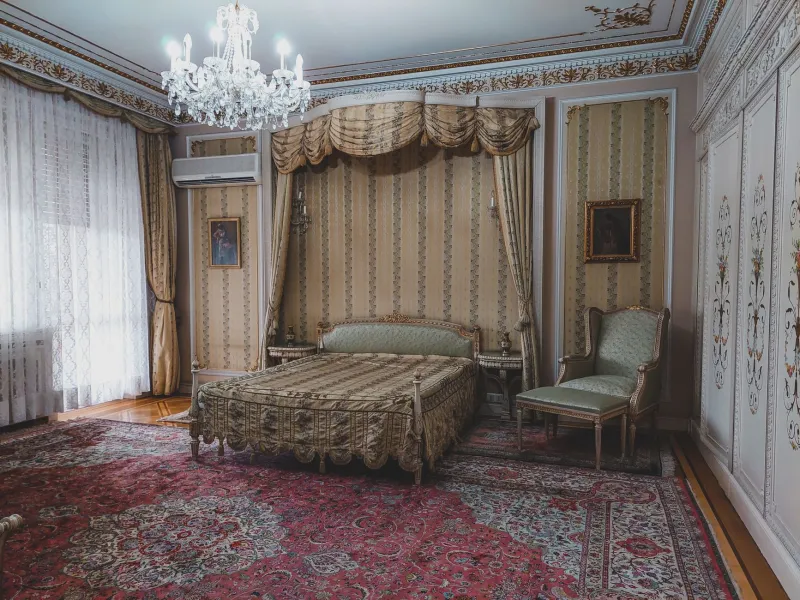
The properties that are genuinely redefining this category take the opposite approach. They preserve the imperfections of their age — the irregular floors, the low doorways, the rooms whose proportions reflect the priorities of a different era — and they frame these not as shortcomings to be apologized for but as evidence of authenticity to be celebrated. The slightly uneven ceiling is not a flaw. It is proof.
Beyond the physical, the most ambitious of these properties are investing in what might be called the intellectual infrastructure of historical experience. Resident historians who can speak to a property's specific past in granular, compelling detail. Archives made available to guests who wish to understand the lineage of the room they are occupying. Dinner menus drawn from historical records of what was served in the same space centuries earlier. These are not gimmicks. They are the mechanisms by which a building's past is transformed from ambient atmosphere into lived encounter.
Ancestral Estates and the Intimacy of the Personal Past
If former palaces offer the grandeur of public history — the kind that appears in textbooks and documentaries — ancestral estates offer something more intimate and, for many travelers, more affecting: the private past. The accumulated life of a single family across multiple generations, legible in the portraits on the walls, the furniture that has not moved in a hundred years, the kitchen garden that has been supplying the same table since before the Civil War.
A number of extraordinary European estates have, in recent years, opened their doors to paying guests — not as conventional hotels, but as something closer to a private loan of a family's living history. In some cases, descendants of the original families remain on the property, dining with guests, sharing stories, and serving as living bridges between the present occupant and the centuries of occupation that preceded them.
For American travelers, the appeal of this arrangement is partly romantic and partly something more searching. Many are, in some sense, looking for a relationship with the past that their own country's relative youth makes difficult to access at home. To sleep in a bed that has been in the same room for two hundred years, in a house that has sheltered the same family through the entirety of American history and long before it, is to experience continuity of a kind that is genuinely rare.
The Ethics of Occupation
No serious conversation about historically significant luxury properties can entirely sidestep the question of what it means to occupy these spaces. The most ethically thoughtful properties are those that engage this question directly — that acknowledge the complexity of their own histories, including the chapters that are uncomfortable, and that treat the full arc of their past as worthy of honest engagement rather than selective celebration.
This kind of transparency, far from diminishing the experience, tends to deepen it. A property that is willing to speak honestly about the totality of what happened within its walls — the power, the loss, the transformation — offers something more genuinely resonant than one that presents only the picturesque highlights. The guest who leaves with a complicated relationship to what they encountered has, in a meaningful sense, been given more than the guest who left simply enchanted.
Proximity to Meaning
Ultimately, what the most significant historically layered properties are selling is not a room or a service or even an experience in the conventional sense. They are selling proximity — to meaning, to continuity, to the long human story of which each guest's life is only the most recent chapter.
In a travel market increasingly defined by novelty, by the new and the next, this is a counterintuitive proposition. It asks the traveler to find their most extraordinary experience not in what has never been done before, but in what has been done, in this place, for longer than memory can reliably reach. It asks them to be moved not by innovation but by duration. And for the travelers who understand what is being offered — who arrive ready to be present to the weight of what surrounds them — there is nothing in the world of luxury travel that comes close to matching it.