The Maker's Mark: How Private Artisan Access Has Become the Rarest Luxury in Travel
There is a particular kind of object that has begun appearing in the homes of America's most thoughtful collectors. It is not always beautiful in the conventional sense. It may be slightly irregular in form, uneven in glaze, or woven with a pattern that resists easy interpretation. What it carries, invisibly but unmistakably, is a story — one that begins not in a retail environment but in a workshop that most of the world will never find.
This is the new trophy of luxury travel: not the acquisition, but the relationship that preceded it.
Beyond the Boutique
For a certain generation of affluent American traveler, the luxury goods acquisition was a reliable feature of the international itinerary. A Hermès scarf from Paris. A hand-stitched leather bag from Florence. A piece of jewelry commissioned in Bangkok. These were the tangible residue of travel well-funded, and they carried their own form of cultural prestige.
The travelers who are now setting the tone for ultra-luxury hospitality have largely moved past this model — not because they cannot afford it, but because they find it insufficient. The finished luxury object, however exquisite, has become too widely accessible, too thoroughly mediated by brand infrastructure, to carry the weight of genuine distinction.
What they want instead is the conversation before the object. The afternoon in the studio. The hands that made the thing, and the knowledge of why they made it the way they did.
"There's been a complete inversion," observes one travel advisor who curates bespoke cultural experiences for clients with eight-figure travel budgets. "Ten years ago, my clients wanted the best product. Now they want the best access. Those are not the same thing at all."
The Resort as Cultural Broker
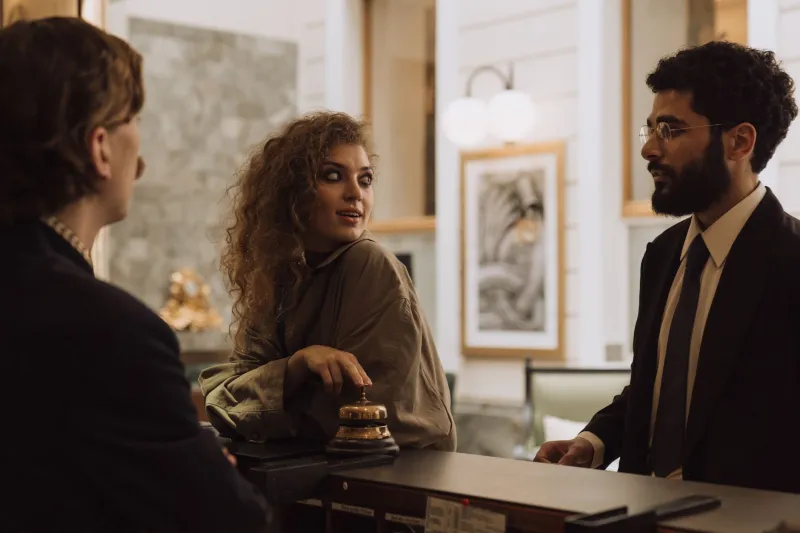
The world's most forward-looking luxury properties have recognized this shift and are repositioning themselves accordingly. The concierge who once specialized in restaurant reservations and spa bookings is being supplemented — and in some cases replaced — by what several properties now call a "cultural liaison": a staff member whose primary function is to maintain and activate a network of relationships with local creators, craftspeople, and knowledge holders.
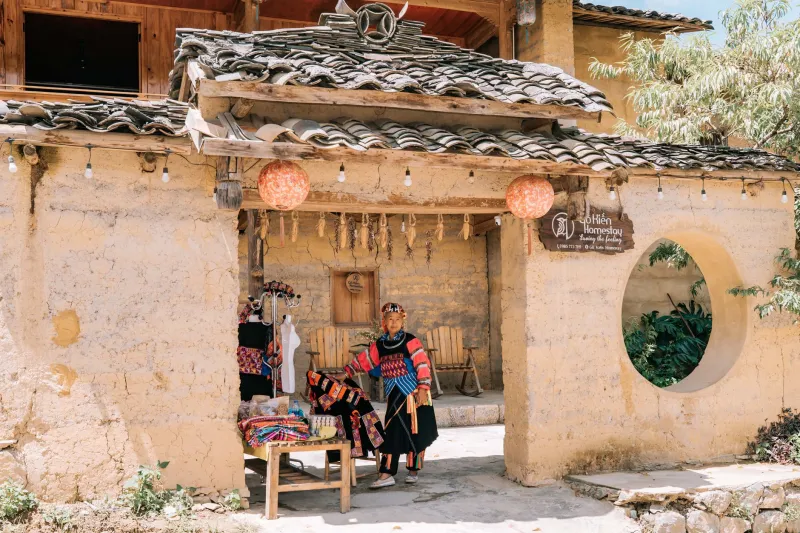
At a small collection of villas in the highlands of Guatemala, guests can spend a morning with a master weaver whose family has practiced backstrap loom techniques for five generations. The arrangement is not advertised. It is offered selectively, to guests whose expressed interests suggest they will approach the encounter with appropriate seriousness. The weaver, for her part, participates not because she needs the income, but because the property's cultural liaison has spent years building the kind of trust that makes such introductions possible.
Similar arrangements are quietly proliferating at properties in Japan, Morocco, Portugal, and across Mexico. In Kyoto, one ryokan maintains relationships with a lacquerware artist who does not accept commissions from the general public and a ceramicist whose work is collected by major institutions. Guests who demonstrate genuine curiosity — and who come prepared with real questions — may be offered an introduction. The visit is never part of a package. It is always a privilege extended.
The Grammar of the Encounter
What distinguishes these experiences from the artisan demonstrations that have long been a feature of cultural tourism is, above all, the quality of the encounter itself. The standard demonstration is performative: a craftsperson executes their work before an audience, answers a few polite questions, and perhaps offers finished pieces for sale. It is pleasant. It is also fundamentally superficial.
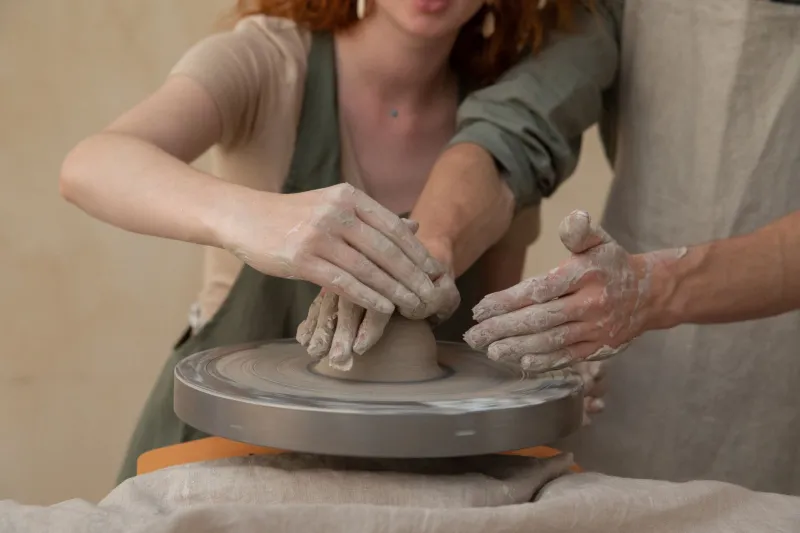
The encounters that high-end resorts are now facilitating are structured differently. They are smaller — often a single guest or couple, never a group. They unfold over hours rather than minutes. They involve genuine dialogue, often mediated by a translator who is themselves a specialist in the relevant craft tradition. And they typically include some form of participation: the guest's hands in the clay, the guest's body at the loom, however clumsily.
This participatory dimension is not incidental. It is, in fact, the point. The object that a guest eventually takes home — if they take anything at all — is transformed by the experience of having, however briefly, attempted the work themselves. Its imperfections become meaningful. Its weight becomes legible.
"My clients don't want a souvenir," says one advisor. "They want an artifact of their own attention. That's a completely different thing to source."
Why Direct Relationships Define the New Status
The social logic underlying this trend is worth examining directly. For much of the twentieth century, luxury consumption derived its status from scarcity of object — the limited edition, the waiting list, the item that could not be had at any price. The internet, and the global expansion of luxury retail, has substantially eroded this model. Almost anything, given sufficient resources, can be acquired.
What cannot be acquired — not through money alone, not through any amount of conventional leverage — is the genuine regard of a master craftsperson who has chosen to share their practice with you. That regard must be earned, or at least appropriately mediated, through relationships built over time. It is, in the most literal sense, not for sale.
This is why the resorts best positioned in this space are not the largest or the most lavishly appointed. They are the ones with the deepest roots in their local communities — the ones whose staff have spent years, sometimes decades, cultivating the trust of artists and artisans who have no particular interest in the hospitality industry.
The Object as Afterthought
Perhaps the most telling indicator of how thoroughly this sensibility has shifted is the attitude of the travelers themselves toward the objects that result from these encounters. Many return home with nothing — or with something so modest that it would attract no attention in a conventional luxury context. A small piece of unglazed pottery. A length of naturally dyed fabric, unfinished at the edges. A hand-bound notebook whose cover bears the imperfect impression of a carved block.
These objects do not announce themselves. They do not carry brand names or certificates of provenance. What they carry is a memory so specific and so embodied that it requires no external validation.
In a culture thoroughly saturated with the language of luxury, that kind of quiet, unverifiable meaning may be the rarest thing of all.